📖 View in Flipbook All editions
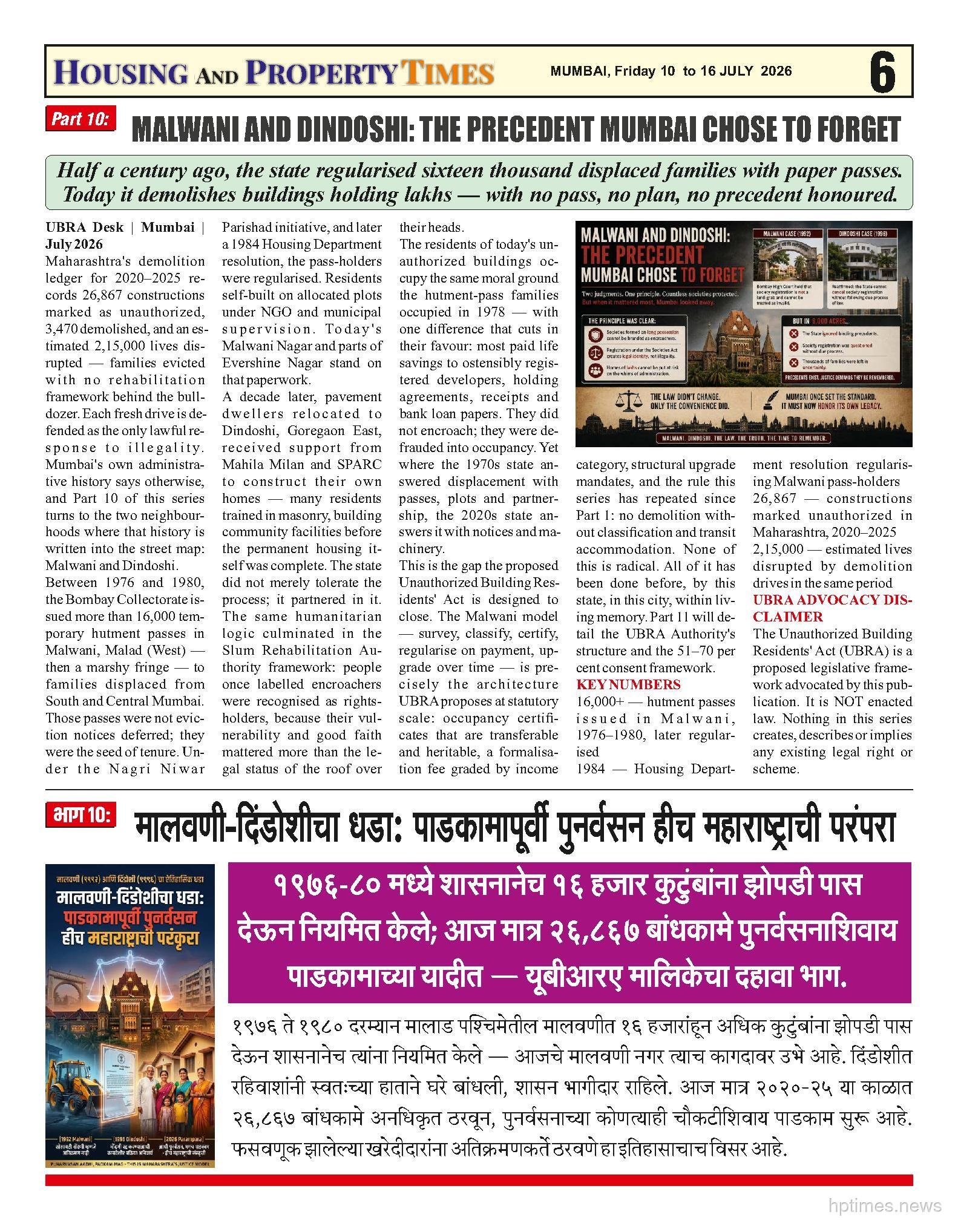
MALWANI AND DINDOSHI: THE PRECEDENT MUMBAI CHOSE TO FORGET
Maharashtra's demolition ledger for 2020–2025 records 26,867 constructions marked as unauthorized, 3,470 demolished, and an estimated 2,15,000 lives disrupted — families evicted with no rehabilitation framework behind the bulldozer. Each fresh drive is defended as the only lawful response to illegality. Mumbai's own administrative history says otherwise, and Part 10 of this series turns to the two neighbourhoods where that history is written into the street map: Malwani and Dindoshi. Between 1976 and 1980, the Bombay Collectorate issued more than 16,000 temporary hutment passes in Malwani, Malad (West) — then a marshy fringe — to families displaced from South and Central Mumbai. Those passes were not eviction notices deferred; they were the seed of tenure. Under the Nagri Niwar Parishad initiative, and later a 1984 Housing Department resolution, the pass-holders were regularised. Residents self-built on allocated plots under NGO and municipal supervision. Today's Malwani Nagar and parts of Evershine Nagar stand on that paperwork. A decade later, pavement dwellers relocated to Dindoshi, Goregaon East, received support from Mahila Milan and SPARC to construct their own homes — many residents trained in masonry, building community facilities before the permanent housing itself was complete. The state did not merely tolerate the process; it partnered in it. The same humanitarian logic culminated in the Slum Rehabilitation Authority framework: people once labelled encroachers were recognised as rights-holders, because their vulnerability and good faith mattered more than the legal status of the roof over their heads. The residents of today's unauthorized buildings occupy the same moral ground the hutment-pass families occupied in 1978 — with one difference that cuts in their favour: most paid life savings to ostensibly registered developers, holding agreements, receipts and bank loan papers. They did not encroach; they were defrauded into occupancy. Yet where the 1970s state answered displacement with passes, plots and partnership, the 2020s state answers it with notices and machinery. This is the gap the proposed Unauthorized Building Residents' Act is designed to close. The Malwani model — survey, classify, certify, regularise on payment, upgrade over time — is precisely the architecture UBRA proposes at statutory scale: occupancy certificates that are transferable and heritable, a formalisation fee graded by income category, structural upgrade mandates, and the rule this series has repeated since Part 1: no demolition without classification and transit accommodation. None of this is radical. All of it has been done before, by this state, in this city, within living memory. Part 11 will detail the UBRA Authority's structure and the 51–70 per cent consent framework.
React
More from this issue & web
 Page 1
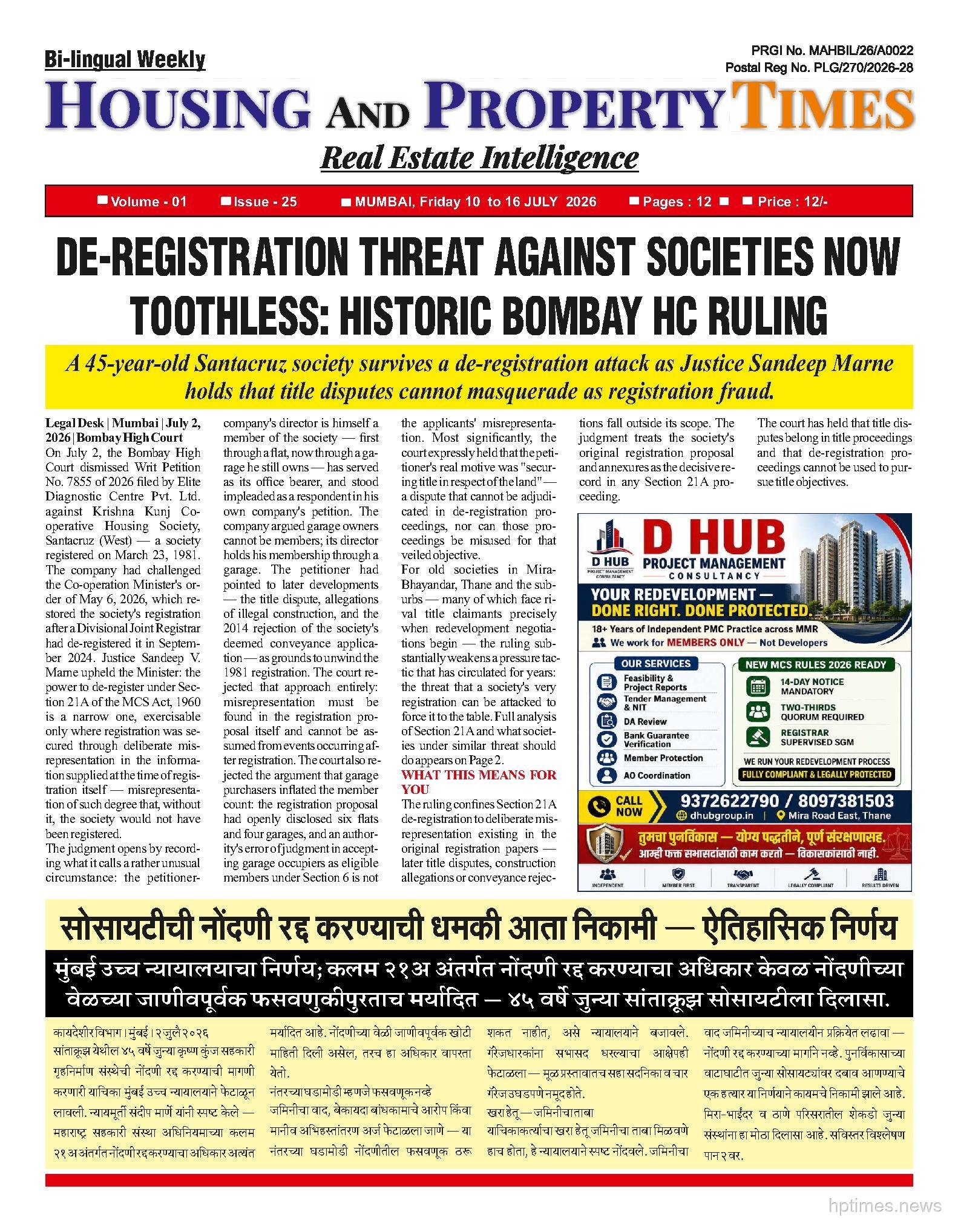
SOCIETY REGISTRATION IS NOT A LAND-GRAB TARGET, RULES BOMBAY HC
Page 1
SOCIETY REGISTRATION IS NOT A LAND-GRAB TARGET, RULES BOMBAY HC
 Page 2
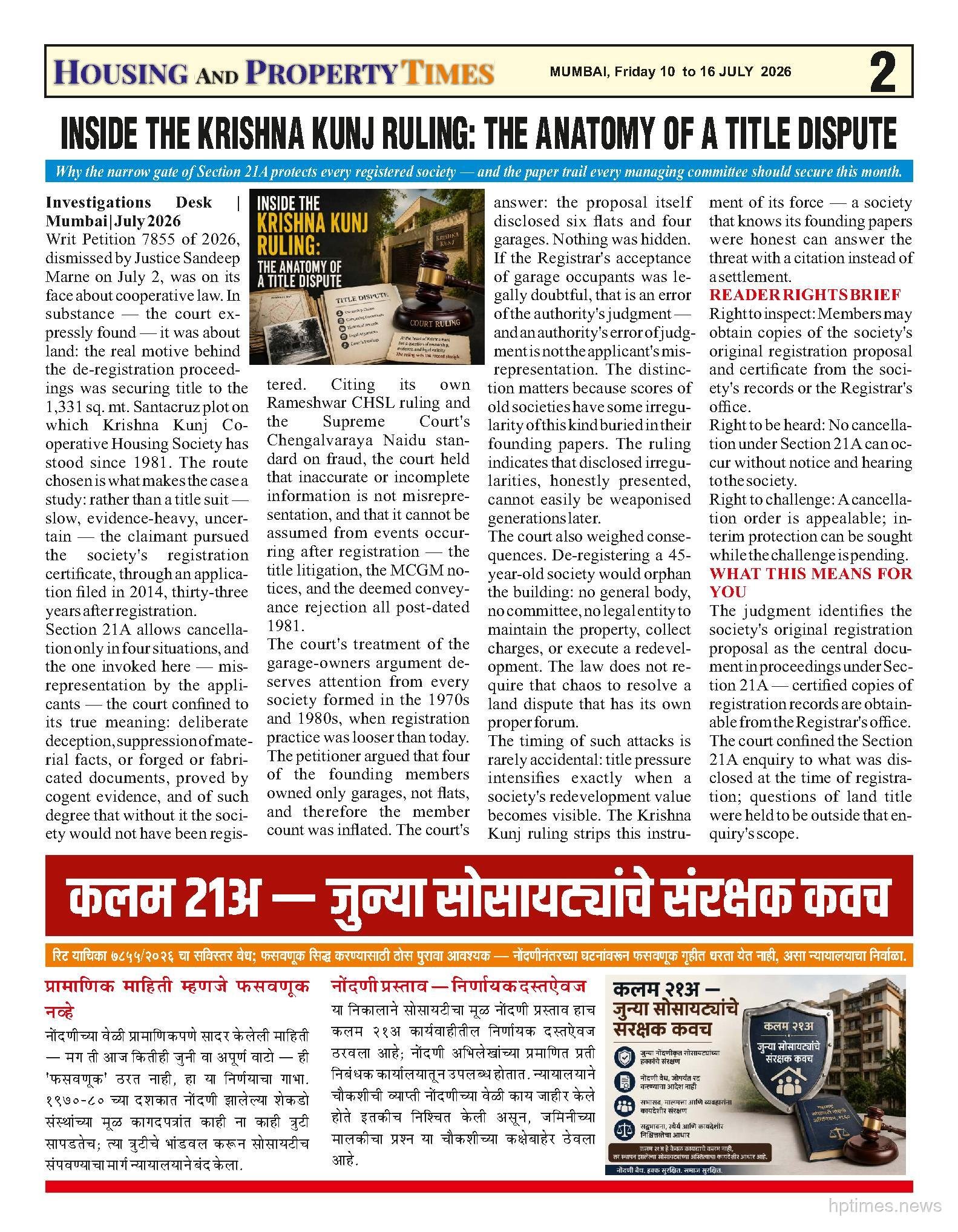
INSIDE THE KRISHNA KUNJ RULING: THE ANATOMY OF A TITLE DISPUTE
Page 2
INSIDE THE KRISHNA KUNJ RULING: THE ANATOMY OF A TITLE DISPUTE
 Page 3
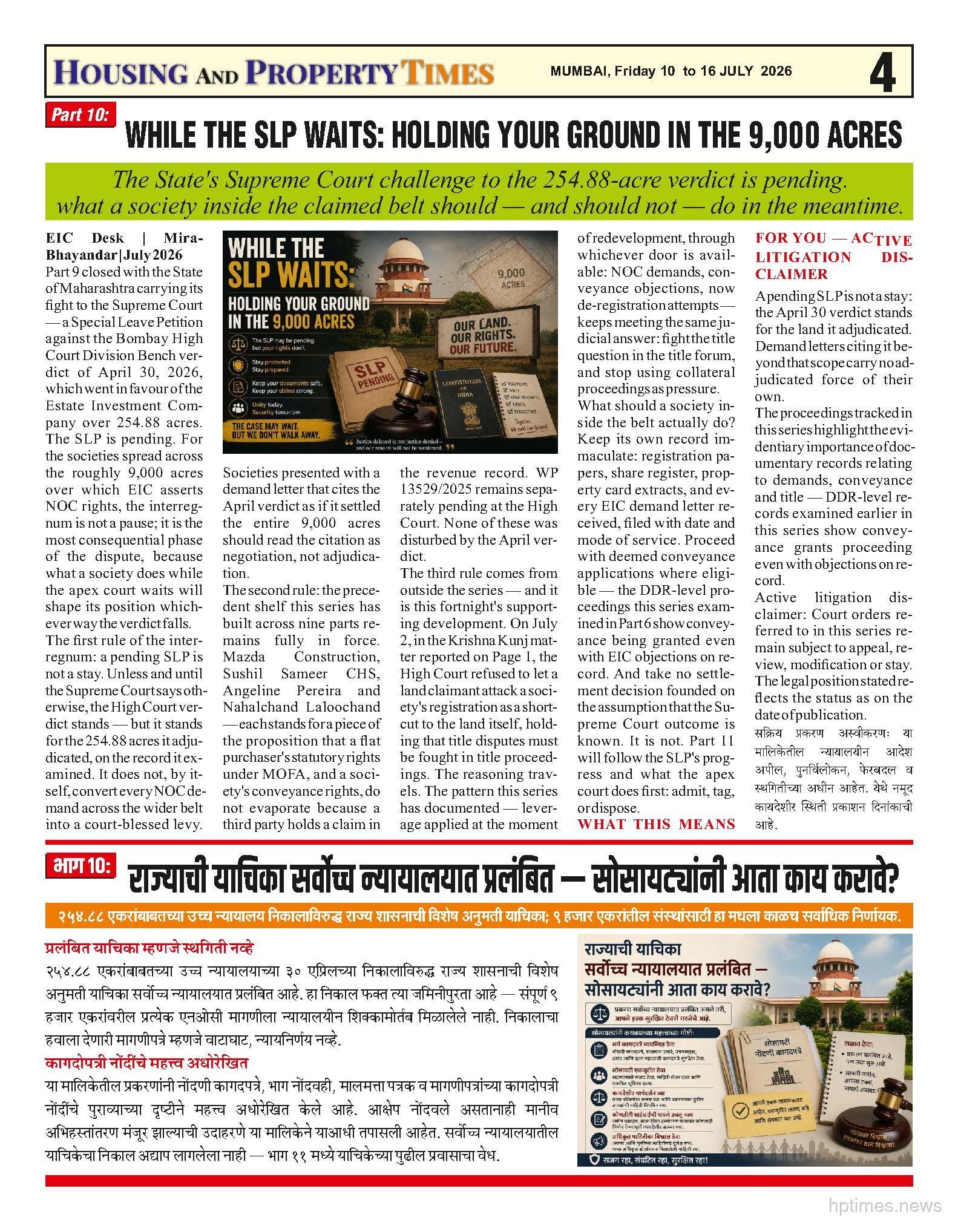
WHILE THE SLP WAITS: HOLDING YOUR GROUND IN THE 9,000 ACRES
Page 3
WHILE THE SLP WAITS: HOLDING YOUR GROUND IN THE 9,000 ACRES
 Page 4
AFTER THE CORRECTION: WHAT TO DEMAND AT THE COLLECTOR'S TABLE
Page 4
AFTER THE CORRECTION: WHAT TO DEMAND AT THE COLLECTOR'S TABLE
 Page 6
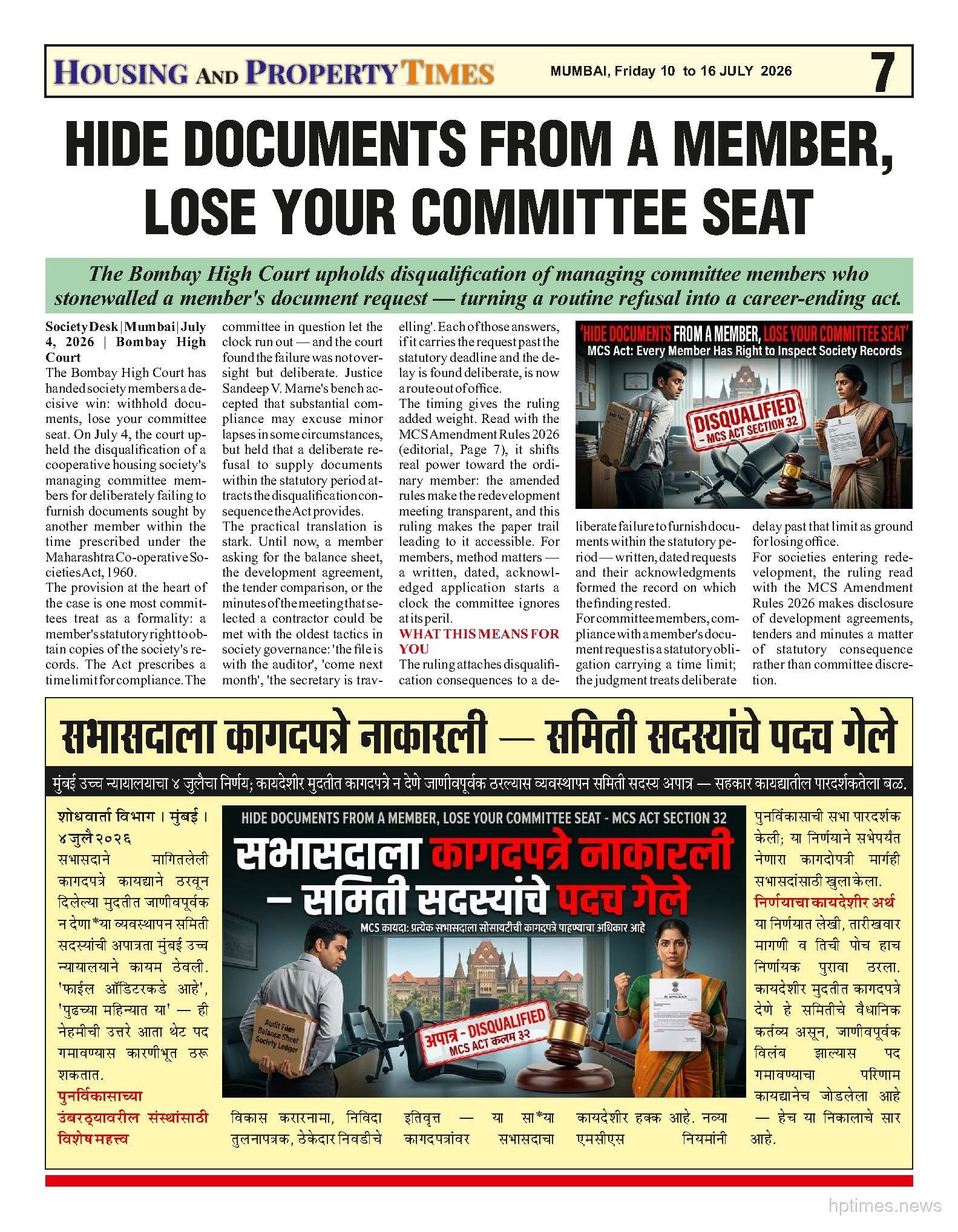
HIDE DOCUMENTS FROM A MEMBER, LOSE YOUR COMMITTEE SEAT
Page 6
HIDE DOCUMENTS FROM A MEMBER, LOSE YOUR COMMITTEE SEAT
 Page 7
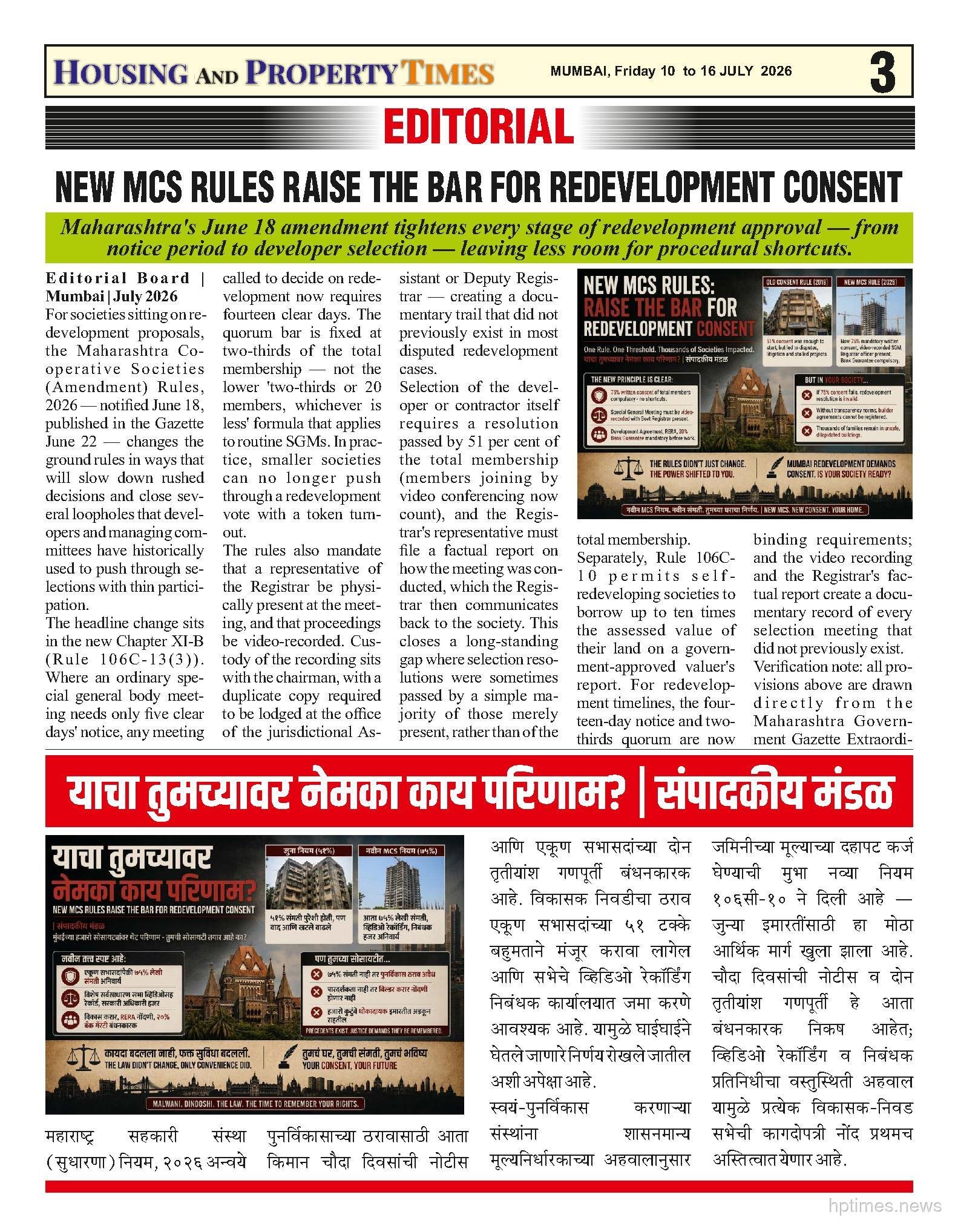
NEW MCS RULES RAISE THE BAR FOR REDEVELOPMENT CONSENT
Page 7
NEW MCS RULES RAISE THE BAR FOR REDEVELOPMENT CONSENT
Comments (0)