📖 View in Flipbook All editions
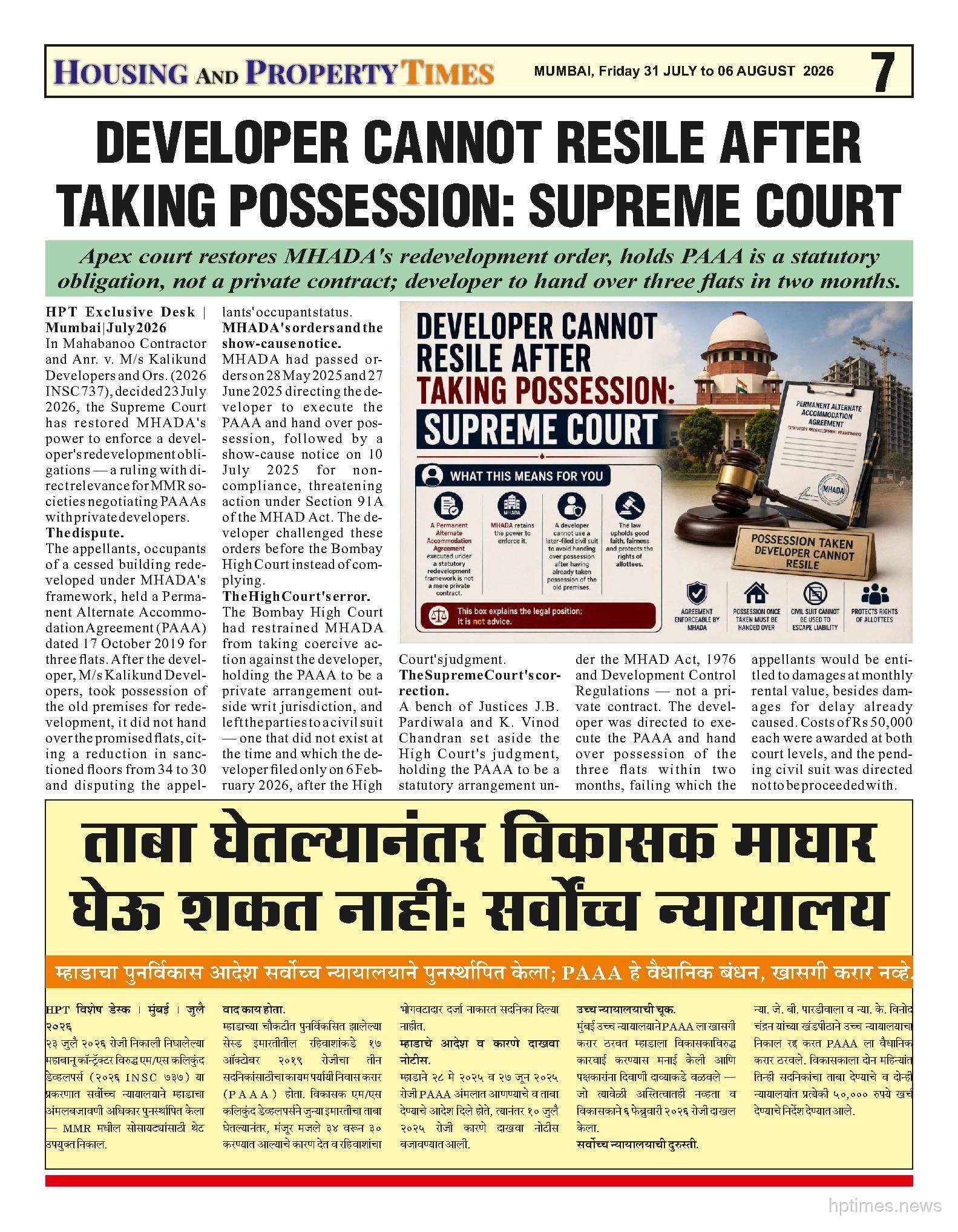
THE PAPERWORK PROBLEM: THREE DISPUTES, ONE PATTERN
Across three unconnected disputes this fortnight, a common thread emerges: documentation meant to verify entitlement is instead being used to delay it. This issue carries three disputes that, on the surface, share nothing — a private company's NOC demand in Mira-Bhayandar, a developer's resistance to a redevelopment agreement in a Mumbai cessed building, and a builder's delayed possession in Chembur. Read together, they share a single structural feature: in each, an ordinary resident's entitlement was made to depend on a document the resident did not control and could not compel — a certificate, an agreement, an occupation clearance. The Supreme Court's intervention this fortnight put it plainly: a statutory obligation cannot be reduced to a private arrangement simply because the paperwork resembles a contract. The same logic runs through the EIC series' distinction between MOFA's statutory conveyance right and an administrative NOC practice with no basis in the Ownership Flats Act. In each case, the remedy available to residents existed on paper long before it was enforced in fact. The same pattern surfaces in this issue's other pages too — a stay on 25,000 CIDCO flats that continues rather than newly imposes delay, a Mulund developer accused of handing over flats without an Occupation Certificate, a state housing scheme announced with more clarity on intent than on statewide timeline. In each, a document or an official step stands between an announced entitlement and its delivery. Housing & Property Times will continue to track where documentation is used to delay rather than to verify — whether that is a private NOC substituting for a statutory right, a civil suit filed after possession is taken, or a pending litigation cited without a stay order in hand. The pattern across this issue's pages is not that the law is silent. It is that enforcement takes years the law itself does not require.
React
More from this issue & web
 Page 1
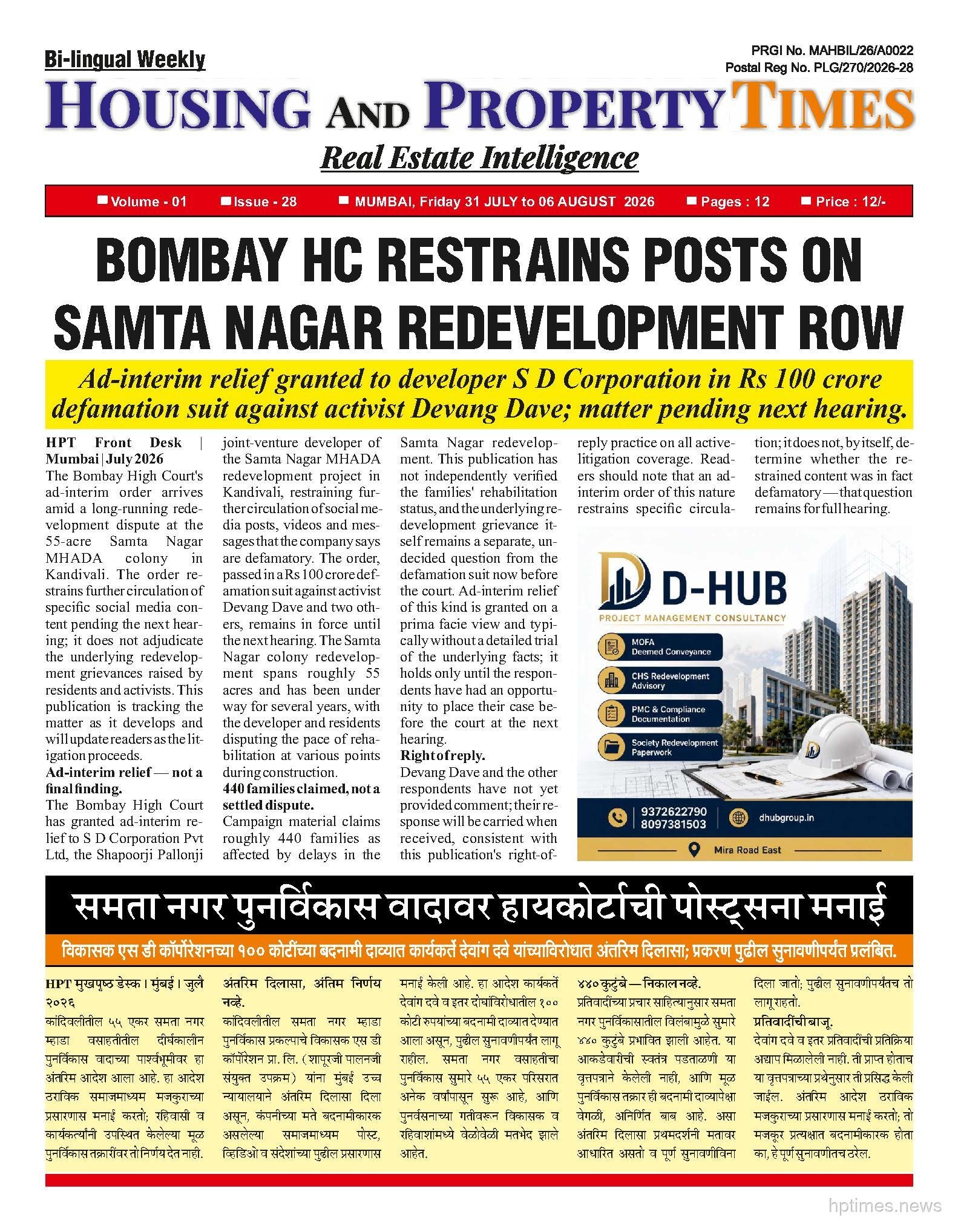
BOMBAY HC RESTRAINS POSTS ON SAMTA NAGAR REDEVELOPMENT ROW
Page 1
BOMBAY HC RESTRAINS POSTS ON SAMTA NAGAR REDEVELOPMENT ROW
 Page 2
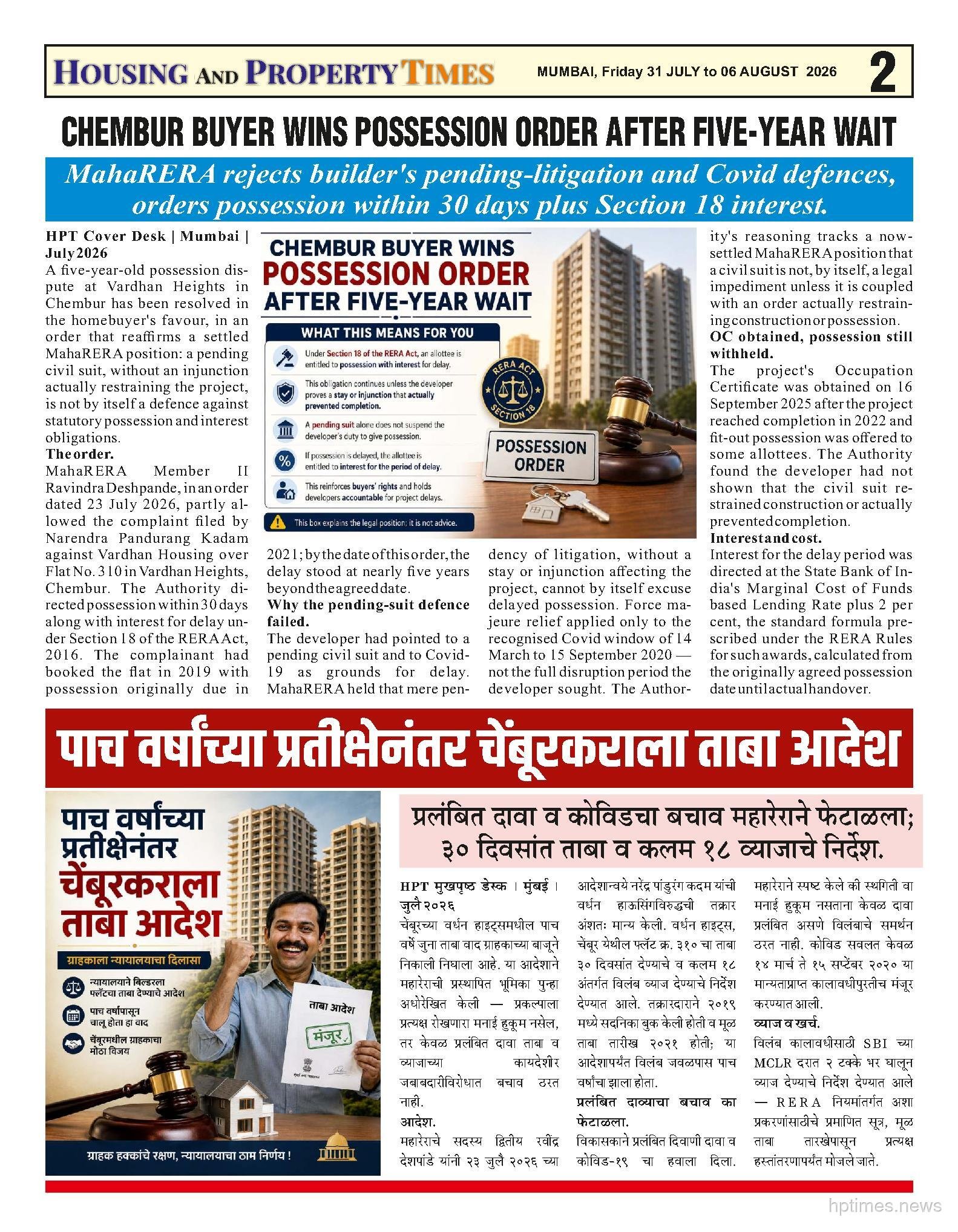
CHEMBUR BUYER WINS POSSESSION ORDER AFTER FIVE-YEAR WAIT
Page 2
CHEMBUR BUYER WINS POSSESSION ORDER AFTER FIVE-YEAR WAIT
 Page 3
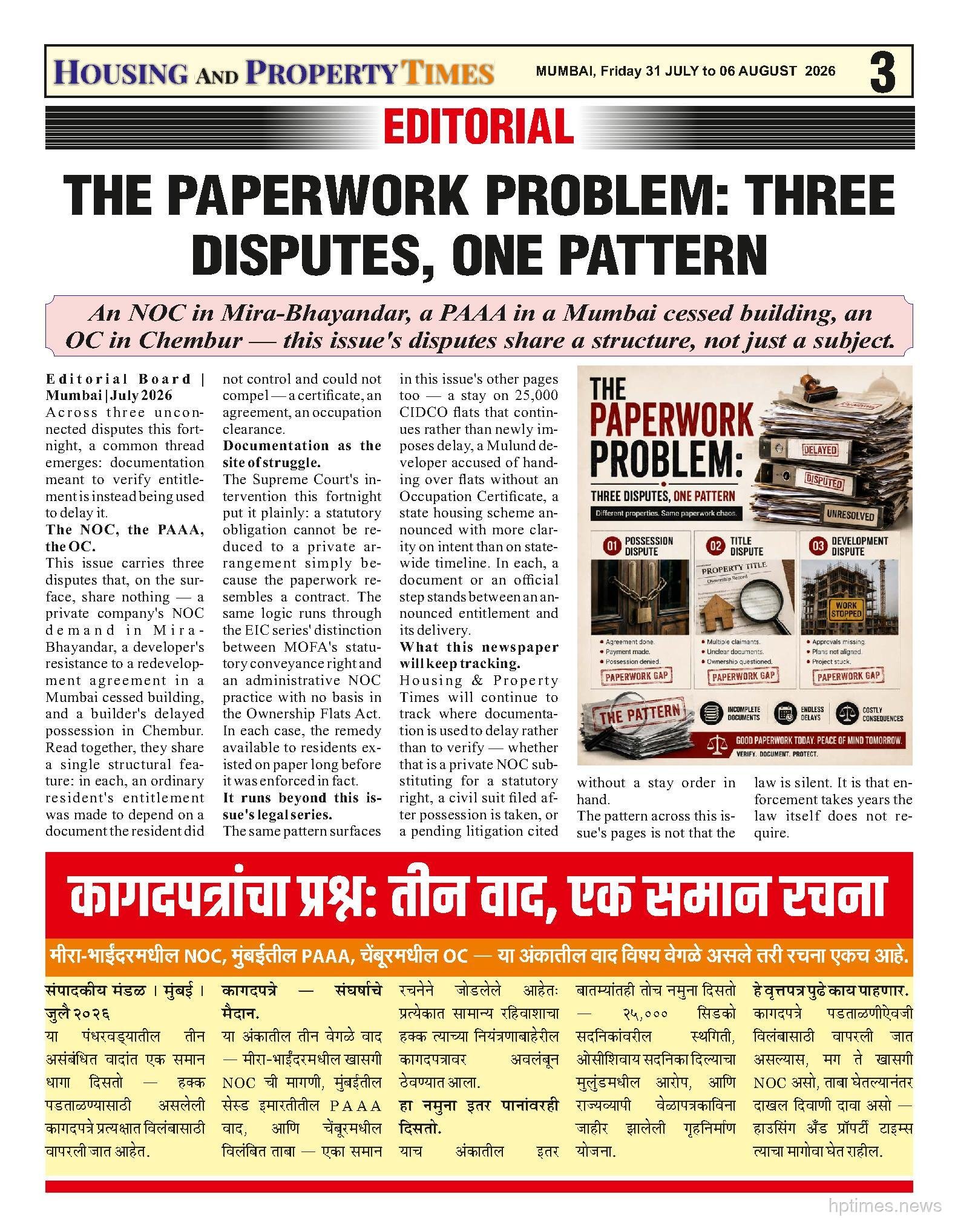
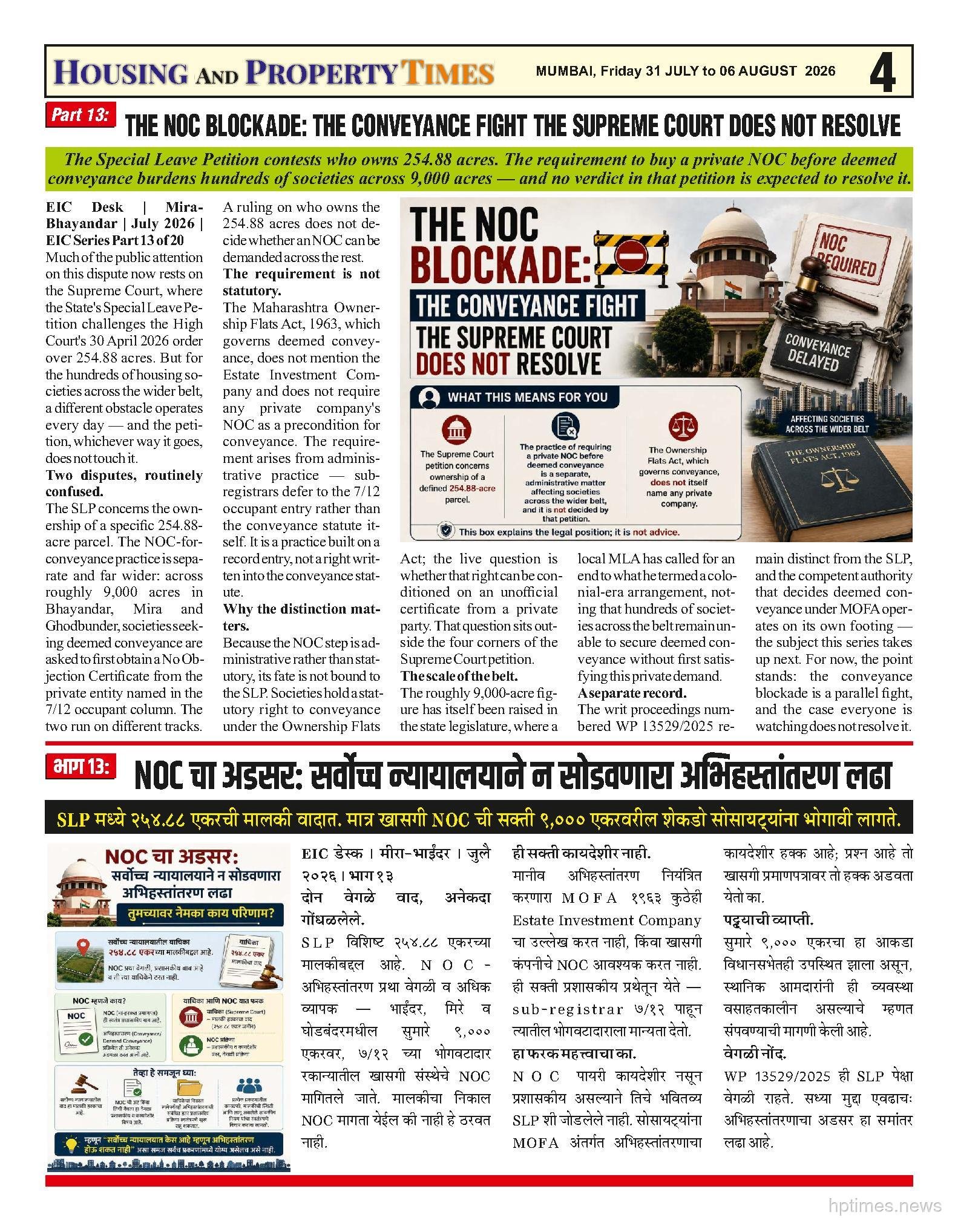
THE NOC BLOCKADE: THE CONVEYANCE FIGHT THE SUPREME COURT DOES NOT RESOLVE
Page 3
THE NOC BLOCKADE: THE CONVEYANCE FIGHT THE SUPREME COURT DOES NOT RESOLVE
 Page 4
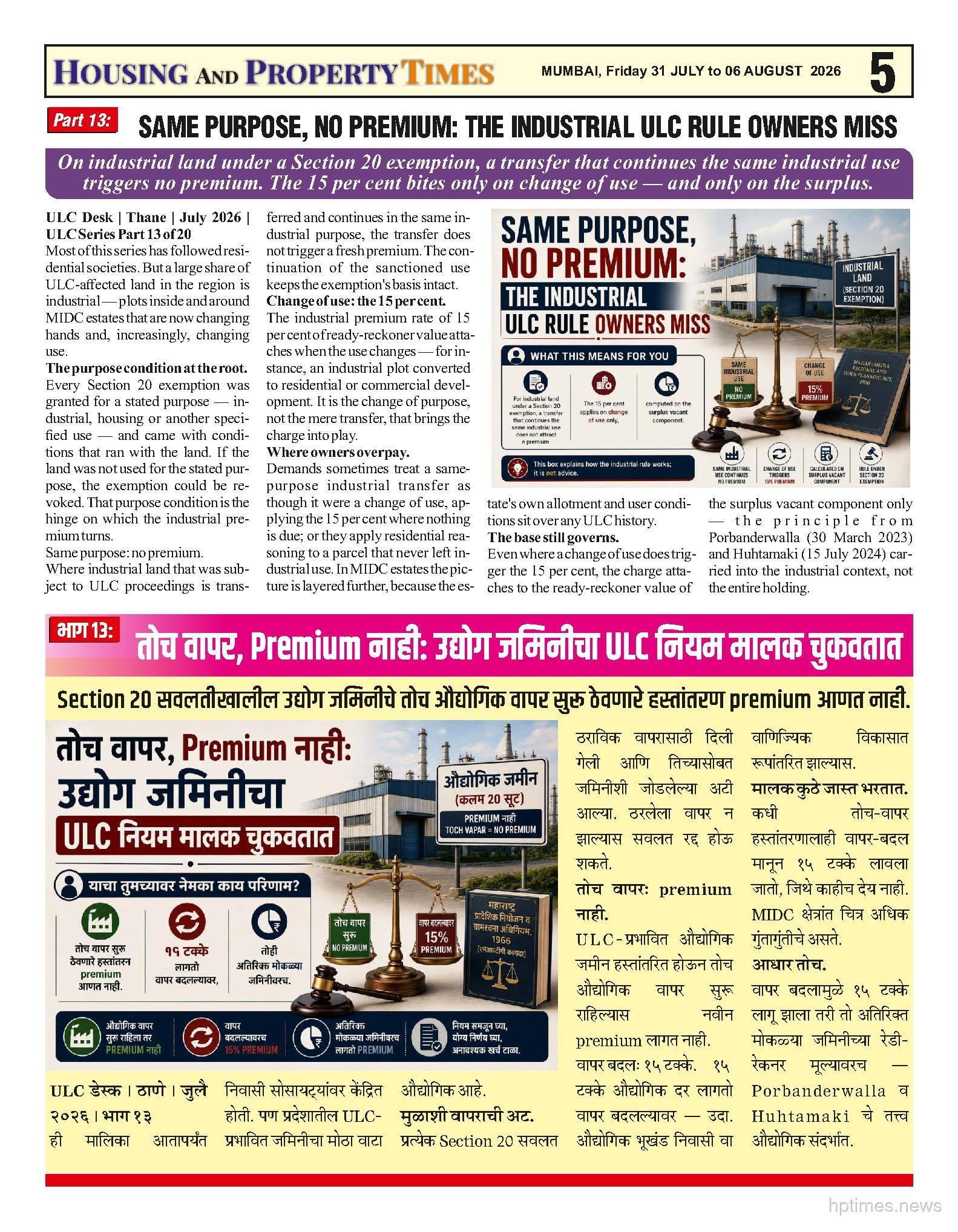
SAME PURPOSE, NO PREMIUM: THE INDUSTRIAL ULC RULE OWNERS MISS
Page 4
SAME PURPOSE, NO PREMIUM: THE INDUSTRIAL ULC RULE OWNERS MISS
 Page 5
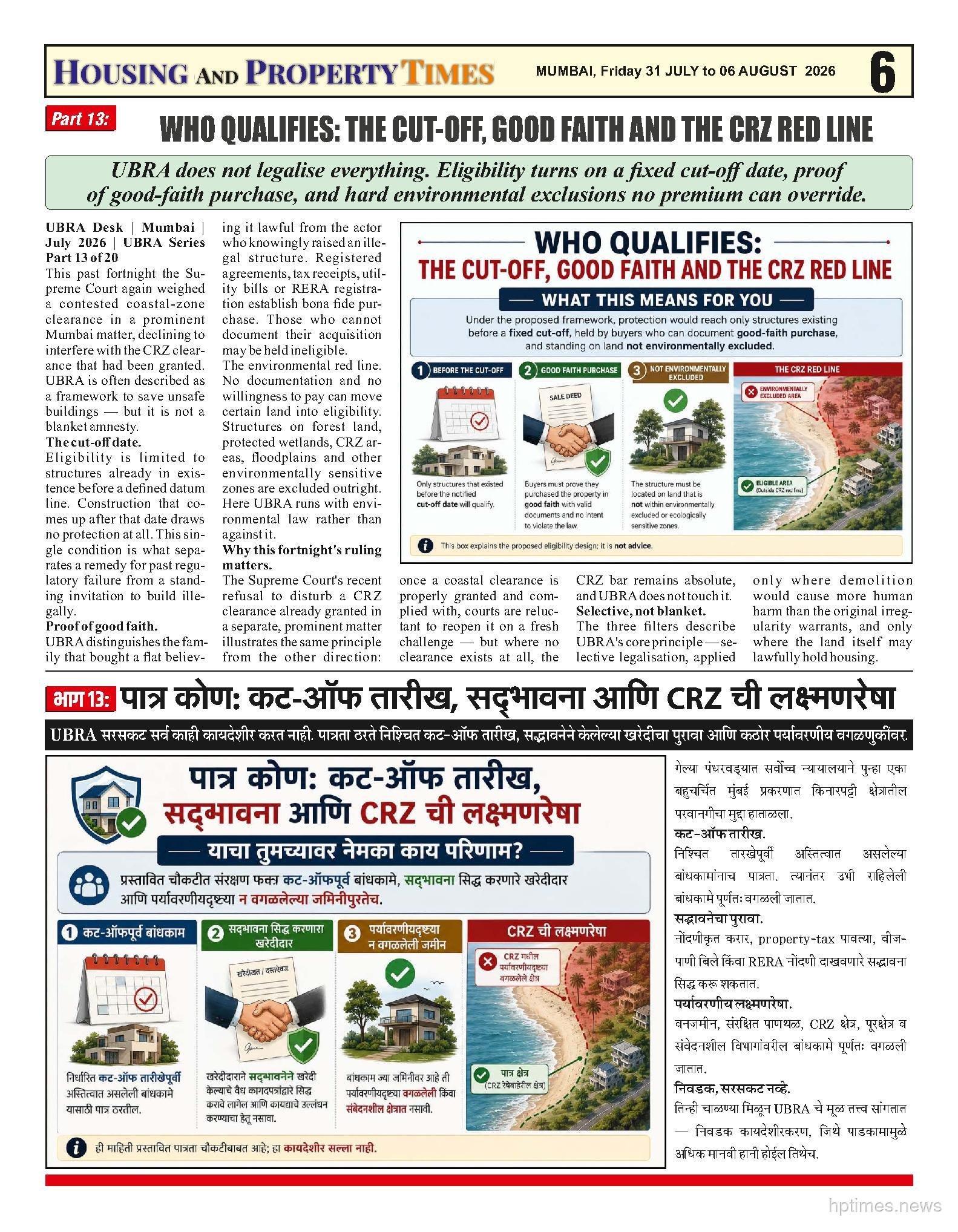
WHO QUALIFIES: THE CUT-OFF, GOOD FAITH AND THE CRZ RED LINE
Page 5
WHO QUALIFIES: THE CUT-OFF, GOOD FAITH AND THE CRZ RED LINE
 Page 6
DEVELOPER CANNOT RESILE AFTER TAKING POSSESSION: SUPREME COURT
Page 6
DEVELOPER CANNOT RESILE AFTER TAKING POSSESSION: SUPREME COURT
Comments (0)