📖 View in Flipbook All editions
WHO QUALIFIES: THE CUT-OFF, GOOD FAITH AND THE CRZ RED LINE
This past fortnight the Supreme Court again weighed a contested coastal-zone clearance in a prominent Mumbai matter, declining to interfere with the CRZ clearance that had been granted. UBRA is often described as a framework to save unsafe buildings — but it is not a blanket amnesty. Eligibility is limited to structures already in existence before a defined datum line. Construction that comes up after that date draws no protection at all. This single condition is what separates a remedy for past regulatory failure from a standing invitation to build illegally. UBRA distinguishes the family that bought a flat believing it lawful from the actor who knowingly raised an illegal structure. Registered agreements, tax receipts, utility bills or RERA registration establish bona fide purchase. Those who cannot document their acquisition may be held ineligible. No documentation and no willingness to pay can move certain land into eligibility. Structures on forest land, protected wetlands, CRZ areas, floodplains and other environmentally sensitive zones are excluded outright. Here UBRA runs with environmental law rather than against it. The Supreme Court's recent refusal to disturb a CRZ clearance already granted in a separate, prominent matter illustrates the same principle from the other direction: once a coastal clearance is properly granted and complied with, courts are reluctant to reopen it on a fresh challenge — but where no clearance exists at all, the CRZ bar remains absolute, and UBRA does not touch it. The three filters describe UBRA's core principle — selective legalisation, applied only where demolition would cause more human harm than the original irregularity warrants, and only where the land itself may lawfully hold housing.
React
More from this issue & web
 Page 1
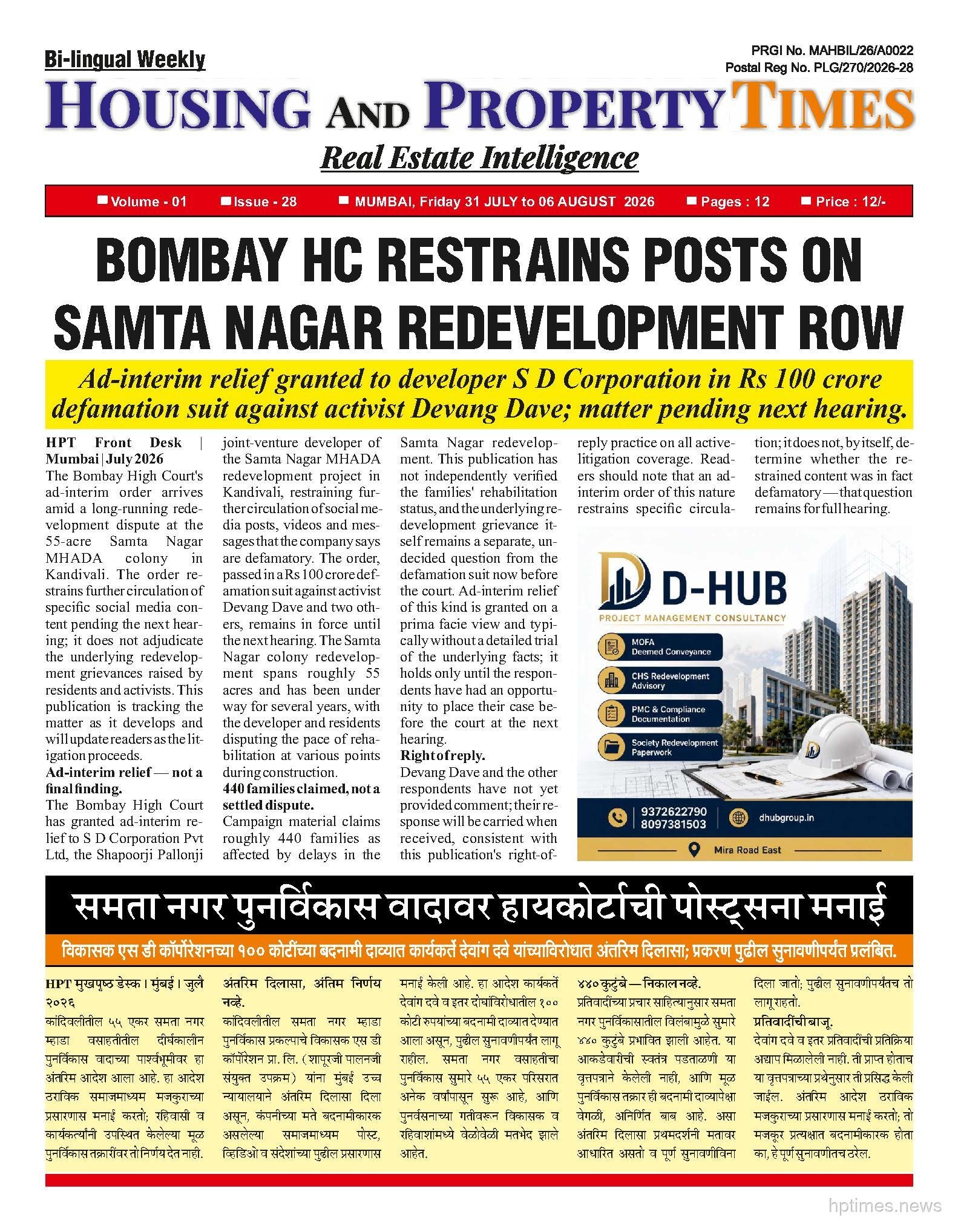
BOMBAY HC RESTRAINS POSTS ON SAMTA NAGAR REDEVELOPMENT ROW
Page 1
BOMBAY HC RESTRAINS POSTS ON SAMTA NAGAR REDEVELOPMENT ROW
 Page 2
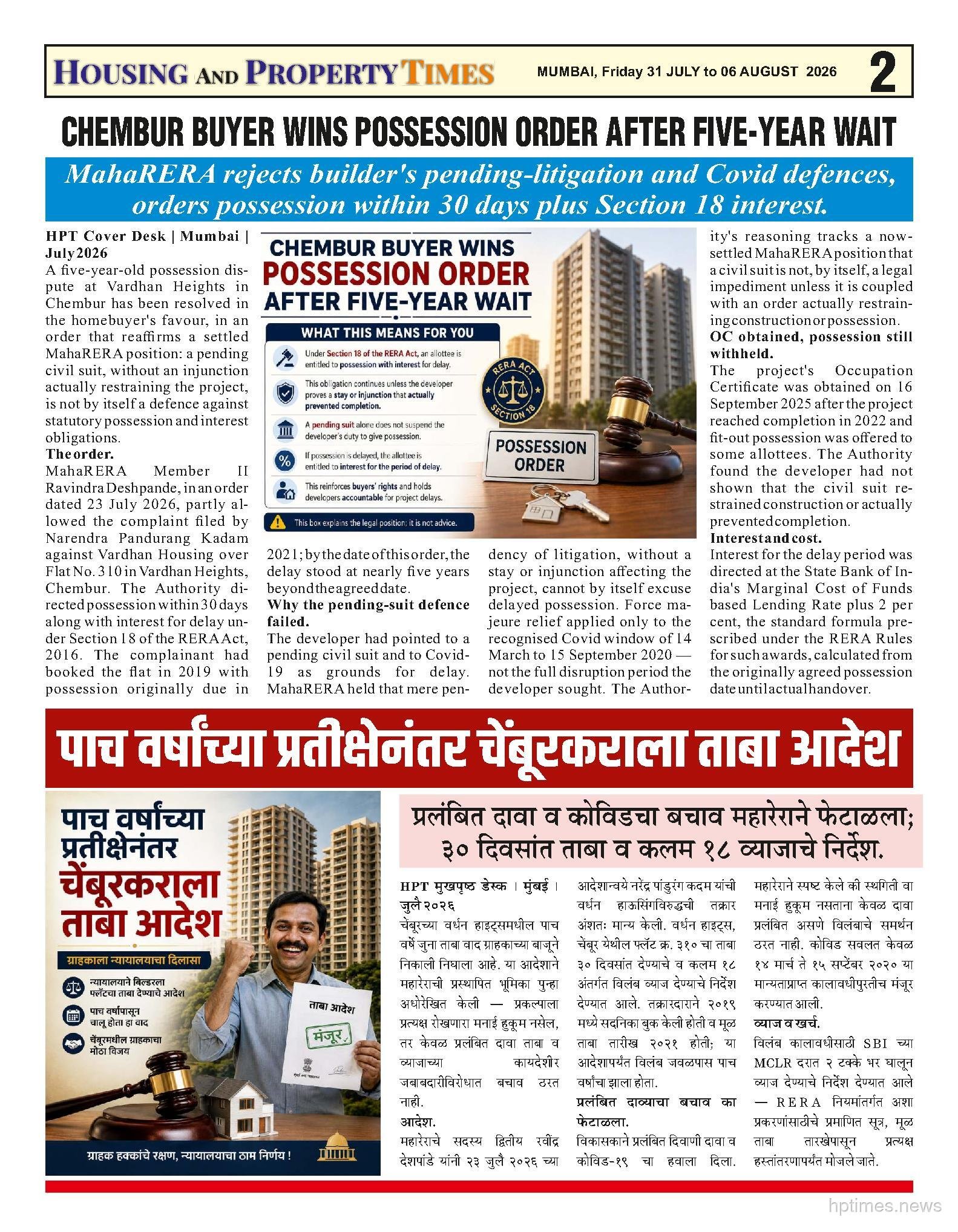
CHEMBUR BUYER WINS POSSESSION ORDER AFTER FIVE-YEAR WAIT
Page 2
CHEMBUR BUYER WINS POSSESSION ORDER AFTER FIVE-YEAR WAIT
 Page 3
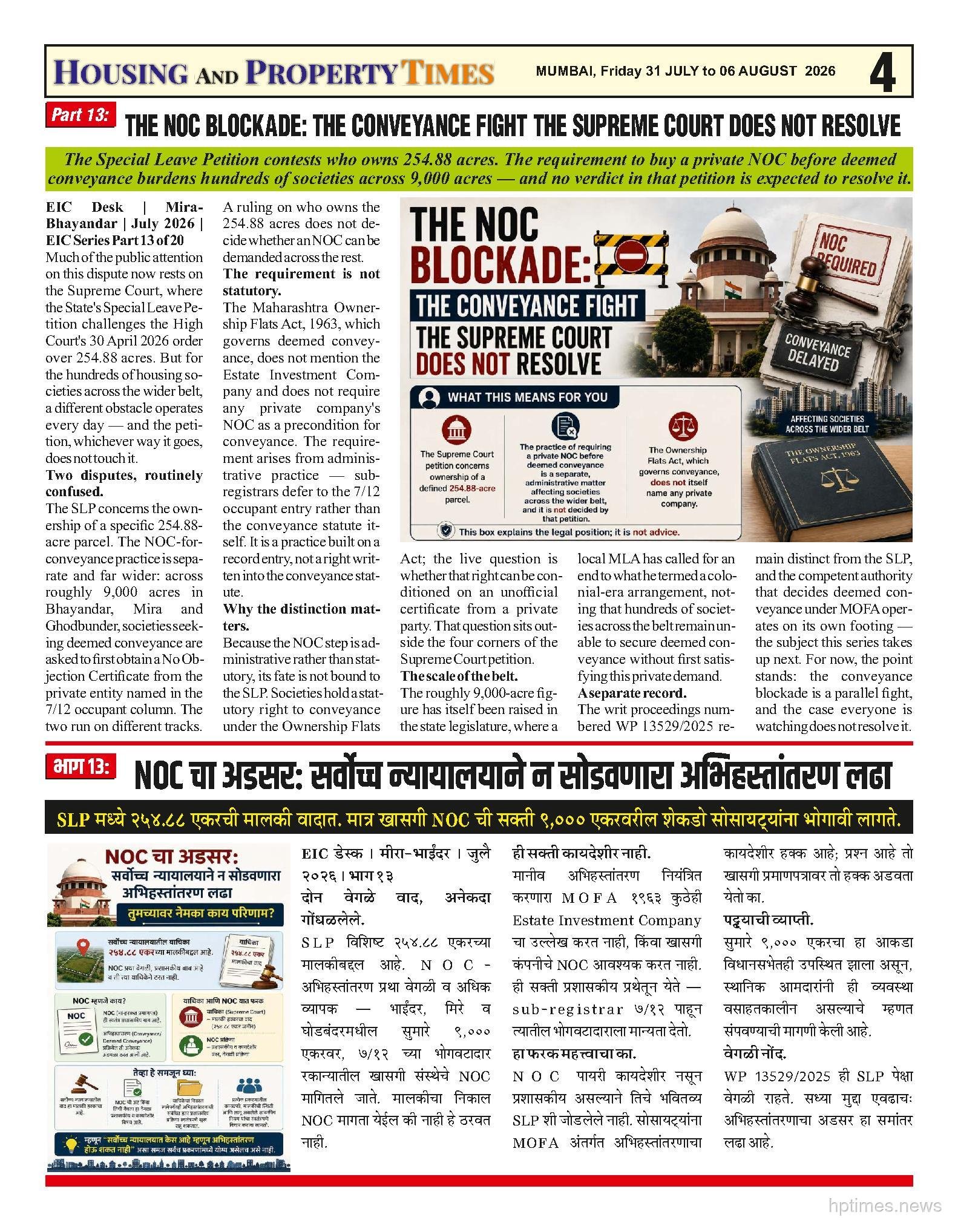
THE NOC BLOCKADE: THE CONVEYANCE FIGHT THE SUPREME COURT DOES NOT RESOLVE
Page 3
THE NOC BLOCKADE: THE CONVEYANCE FIGHT THE SUPREME COURT DOES NOT RESOLVE
 Page 4
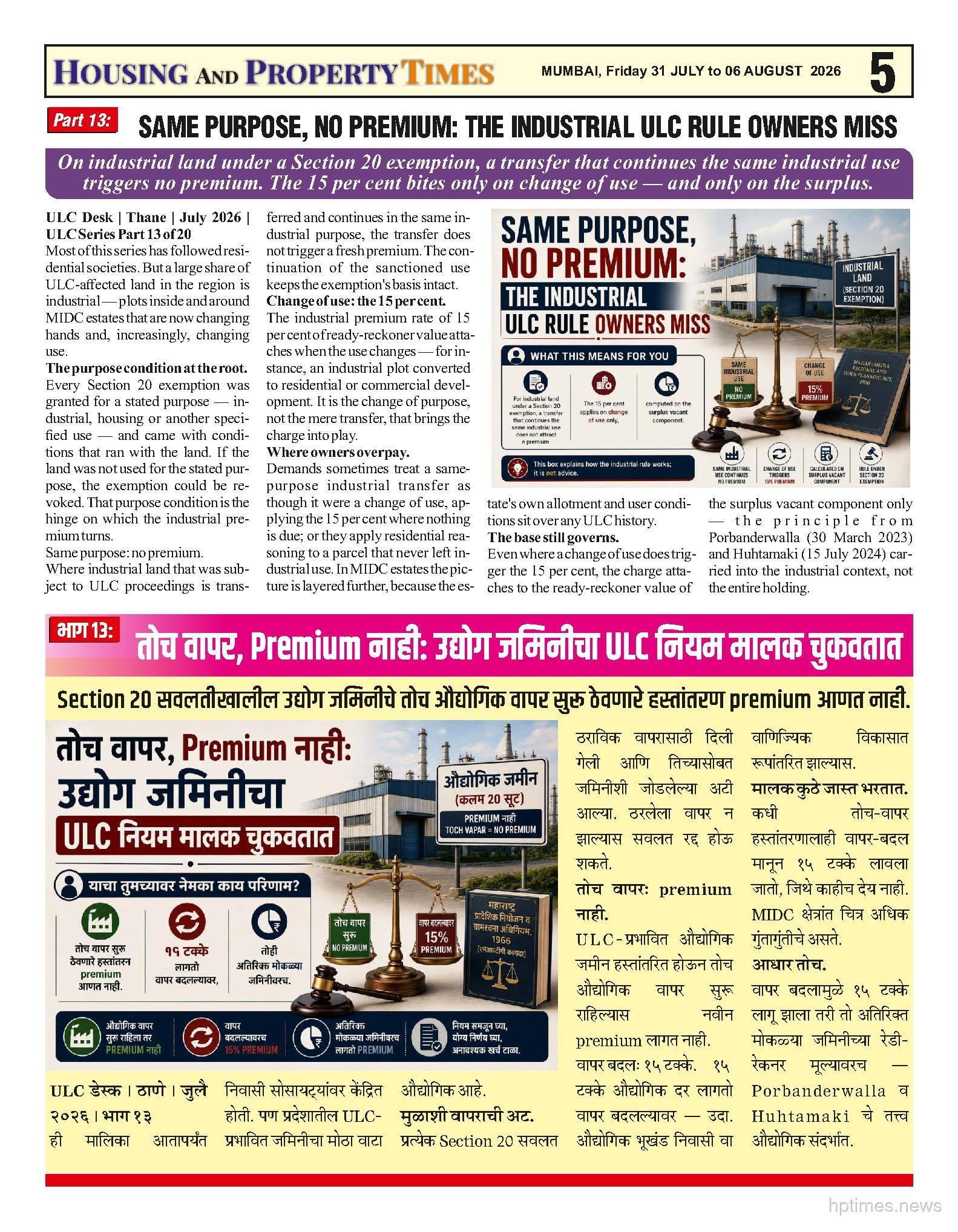
SAME PURPOSE, NO PREMIUM: THE INDUSTRIAL ULC RULE OWNERS MISS
Page 4
SAME PURPOSE, NO PREMIUM: THE INDUSTRIAL ULC RULE OWNERS MISS
 Page 6
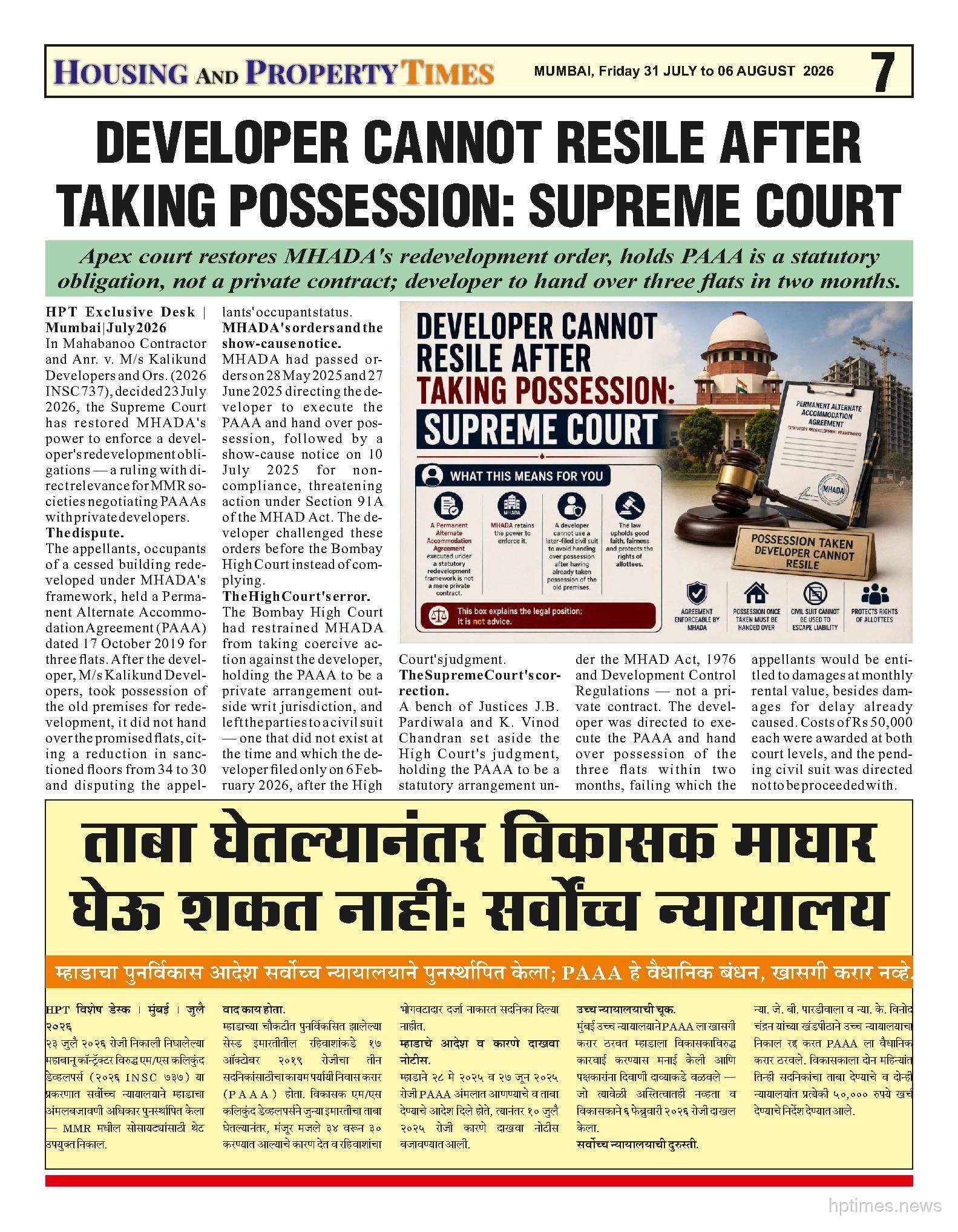
DEVELOPER CANNOT RESILE AFTER TAKING POSSESSION: SUPREME COURT
Page 6
DEVELOPER CANNOT RESILE AFTER TAKING POSSESSION: SUPREME COURT
 Page 7
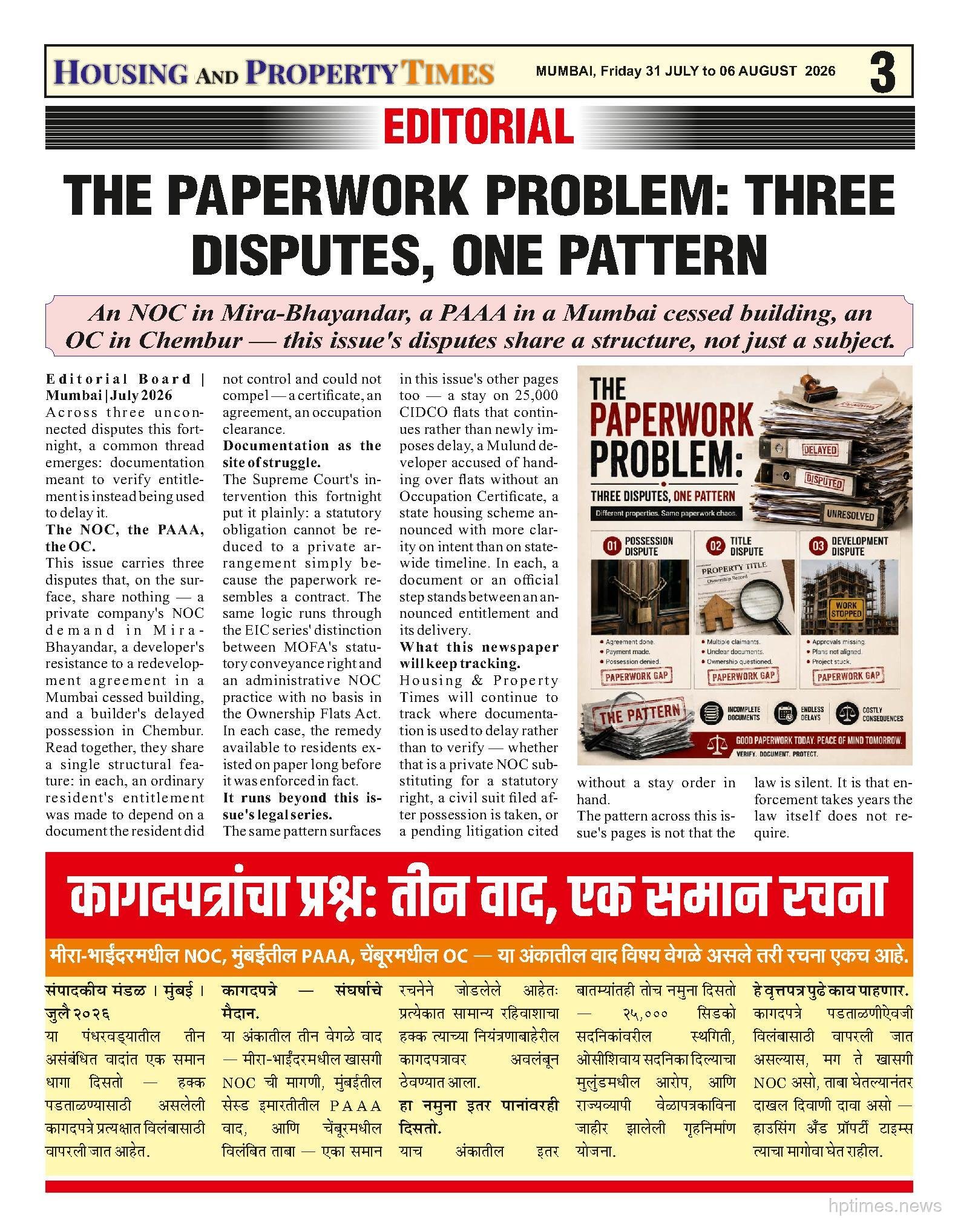
THE PAPERWORK PROBLEM: THREE DISPUTES, ONE PATTERN
Page 7
THE PAPERWORK PROBLEM: THREE DISPUTES, ONE PATTERN
Comments (0)