📖 View in Flipbook All editions
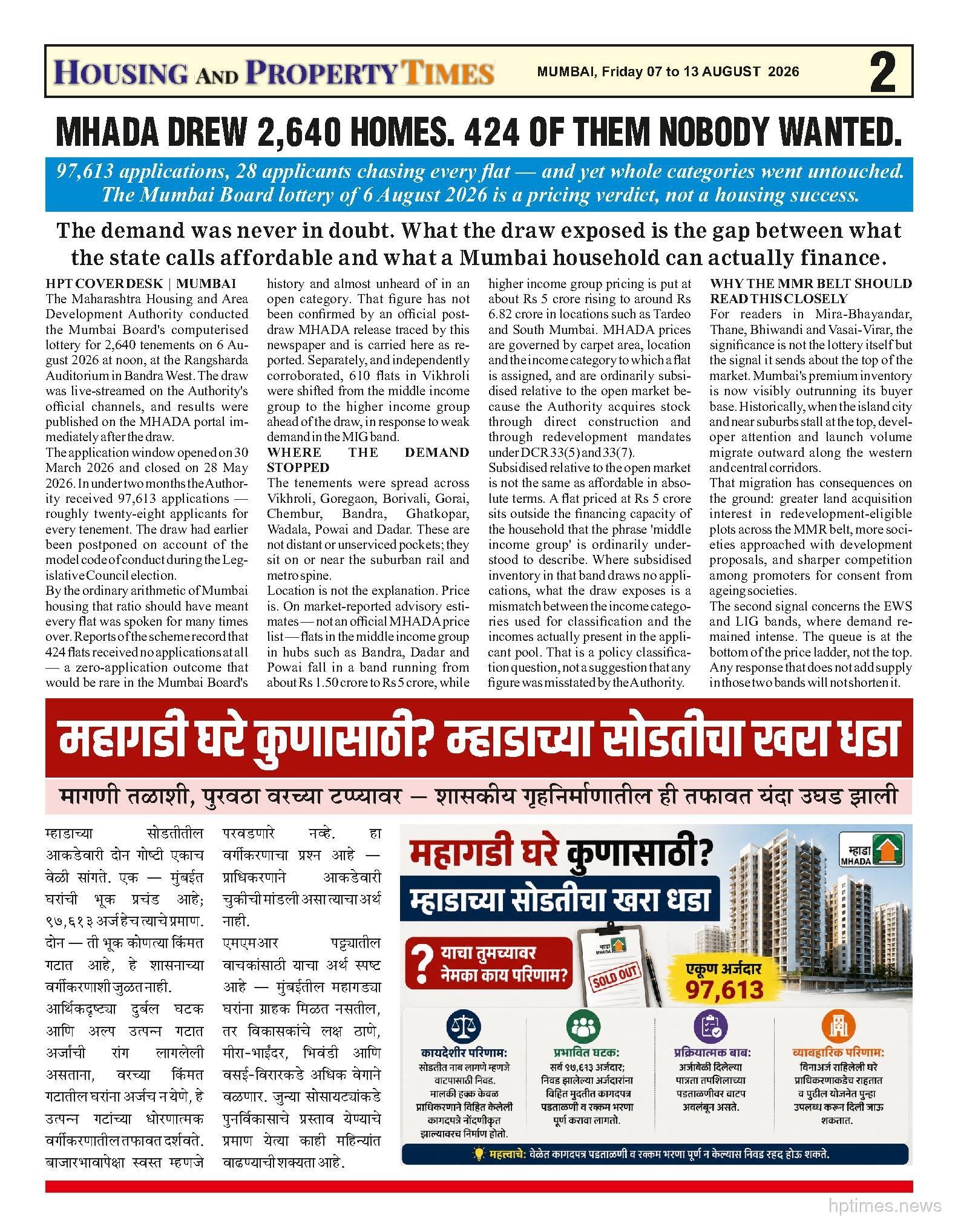
MHADA DREW 2,640 HOMES. 424 OF THEM NOBODY WANTED.
HPT COVER DESK | MUMBAI The Maharashtra Housing and Area Development Authority conducted the Mumbai Board's computerised lottery for 2,640 tenements on 6 August 2026 at noon, at the Rangsharda Auditorium in Bandra West. The draw was live-streamed on the Authority's official channels, and results were published on the MHADA portal immediately after the draw. The application window opened on 30 March 2026 and closed on 28 May 2026. In under two months the Authority received 97,613 applications — roughly twenty-eight applicants for every tenement. The draw had earlier been postponed on account of the model code of conduct during the Legislative Council election. By the ordinary arithmetic of Mumbai housing that ratio should have meant every flat was spoken for many times over. Reports of the scheme record that 424 flats received no applications at all — a zero-application outcome that would be rare in the Mumbai Board's history and almost unheard of in an open category. That figure has not been confirmed by an official post-draw MHADA release traced by this newspaper and is carried here as reported. Separately, and independently corroborated, 610 flats in Vikhroli were shifted from the middle income group to the higher income group ahead of the draw, in response to weak demand in the MIG band. The tenements were spread across Vikhroli, Goregaon, Borivali, Gorai, Chembur, Bandra, Ghatkopar, Wadala, Powai and Dadar. These are not distant or unserviced pockets; they sit on or near the suburban rail and metro spine. Location is not the explanation. Price is. On market-reported advisory estimates — not an official MHADA price list — flats in the middle income group in hubs such as Bandra, Dadar and Powai fall in a band running from about Rs 1.50 crore to Rs 5 crore, while higher income group pricing is put at about Rs 5 crore rising to around Rs 6.82 crore in locations such as Tardeo and South Mumbai. MHADA prices are governed by carpet area, location and the income category to which a flat is assigned, and are ordinarily subsidised relative to the open market because the Authority acquires stock through direct construction and through redevelopment mandates under DCR 33(5) and 33(7). Subsidised relative to the open market is not the same as affordable in absolute terms. A flat priced at Rs 5 crore sits outside the financing capacity of the household that the phrase 'middle income group' is ordinarily understood to describe. Where subsidised inventory in that band draws no applications, what the draw exposes is a mismatch between the income categories used for classification and the incomes actually present in the applicant pool. That is a policy classification question, not a suggestion that any figure was misstated by the Authority. For readers in Mira-Bhayandar, Thane, Bhiwandi and Vasai-Virar, the significance is not the lottery itself but the signal it sends about the top of the market. Mumbai's premium inventory is now visibly outrunning its buyer base. Historically, when the island city and near suburbs stall at the top, developer attention and launch volume migrate outward along the western and central corridors. That migration has consequences on the ground: greater land acquisition interest in redevelopment-eligible plots across the MMR belt, more societies approached with development proposals, and sharper competition among promoters for consent from ageing societies. The second signal concerns the EWS and LIG bands, where demand remained intense. The queue is at the bottom of the price ladder, not the top. Any response that does not add supply in those two bands will not shorten it.
React
More from this issue & web
 Page 1
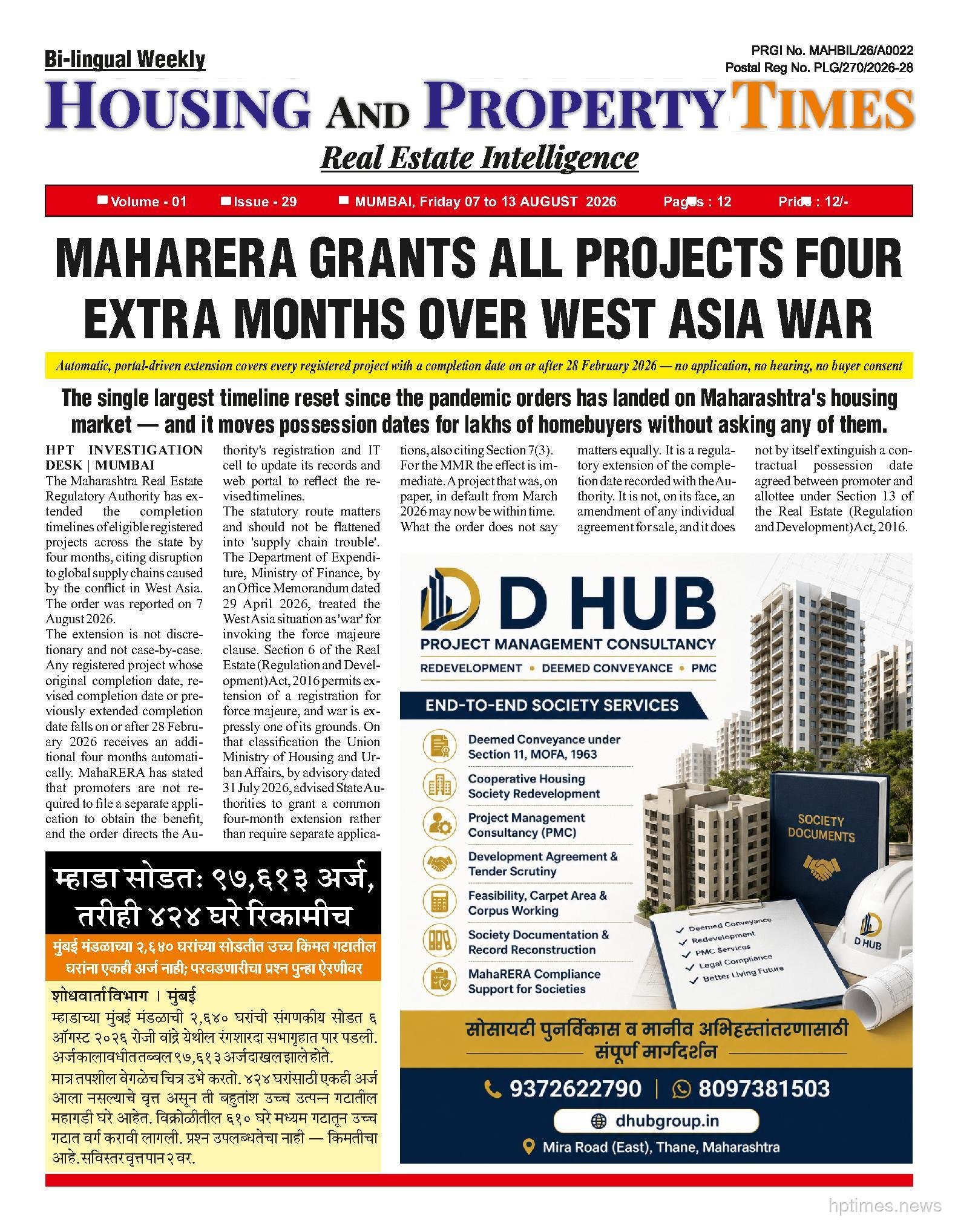
MAHARERA GRANTS ALL PROJECTS FOUR EXTRA MONTHS OVER WEST ASIA WAR
Page 1
MAHARERA GRANTS ALL PROJECTS FOUR EXTRA MONTHS OVER WEST ASIA WAR
 Page 3
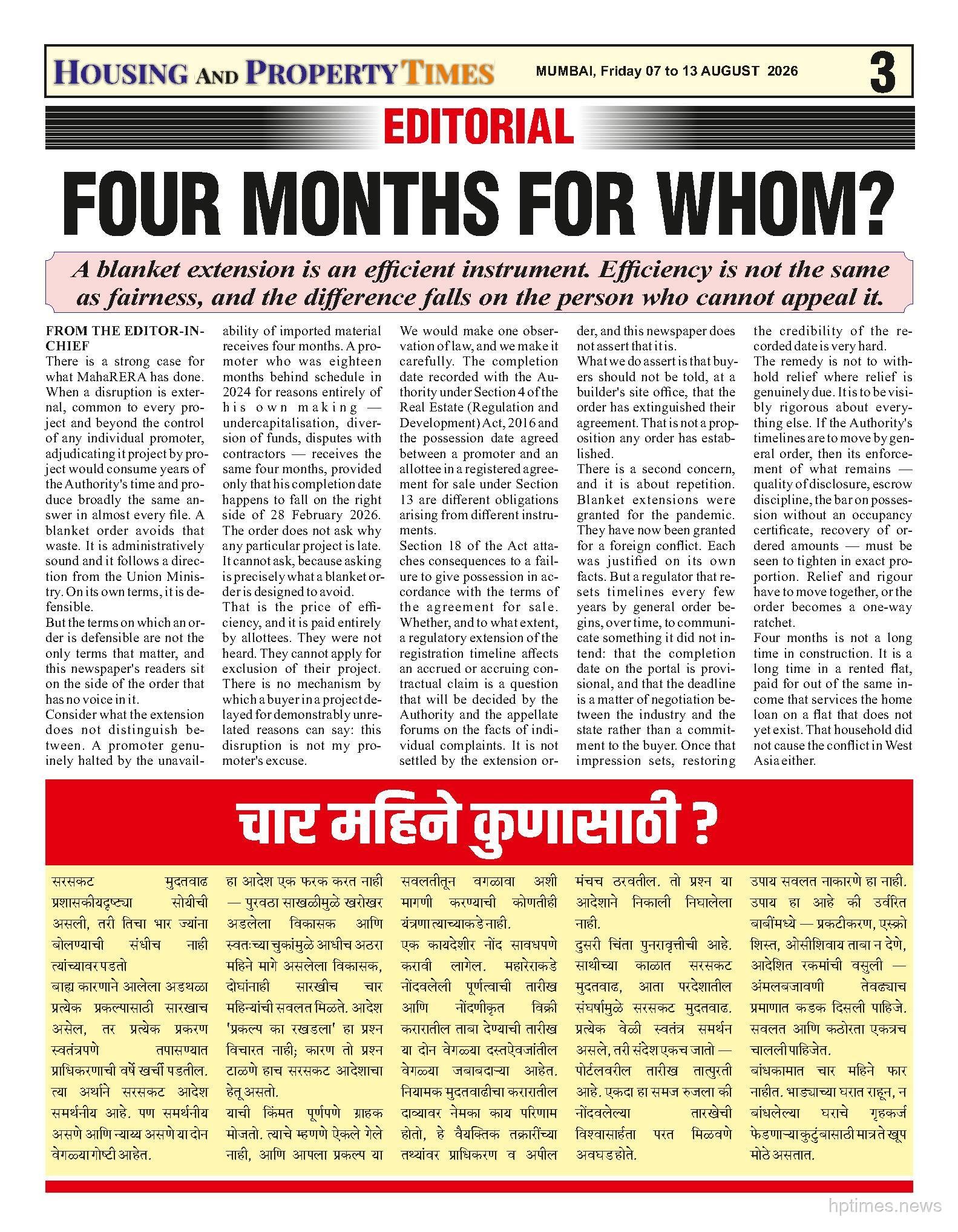
FOUR MONTHS FOR WHOM?
Page 3
FOUR MONTHS FOR WHOM?
 Page 4
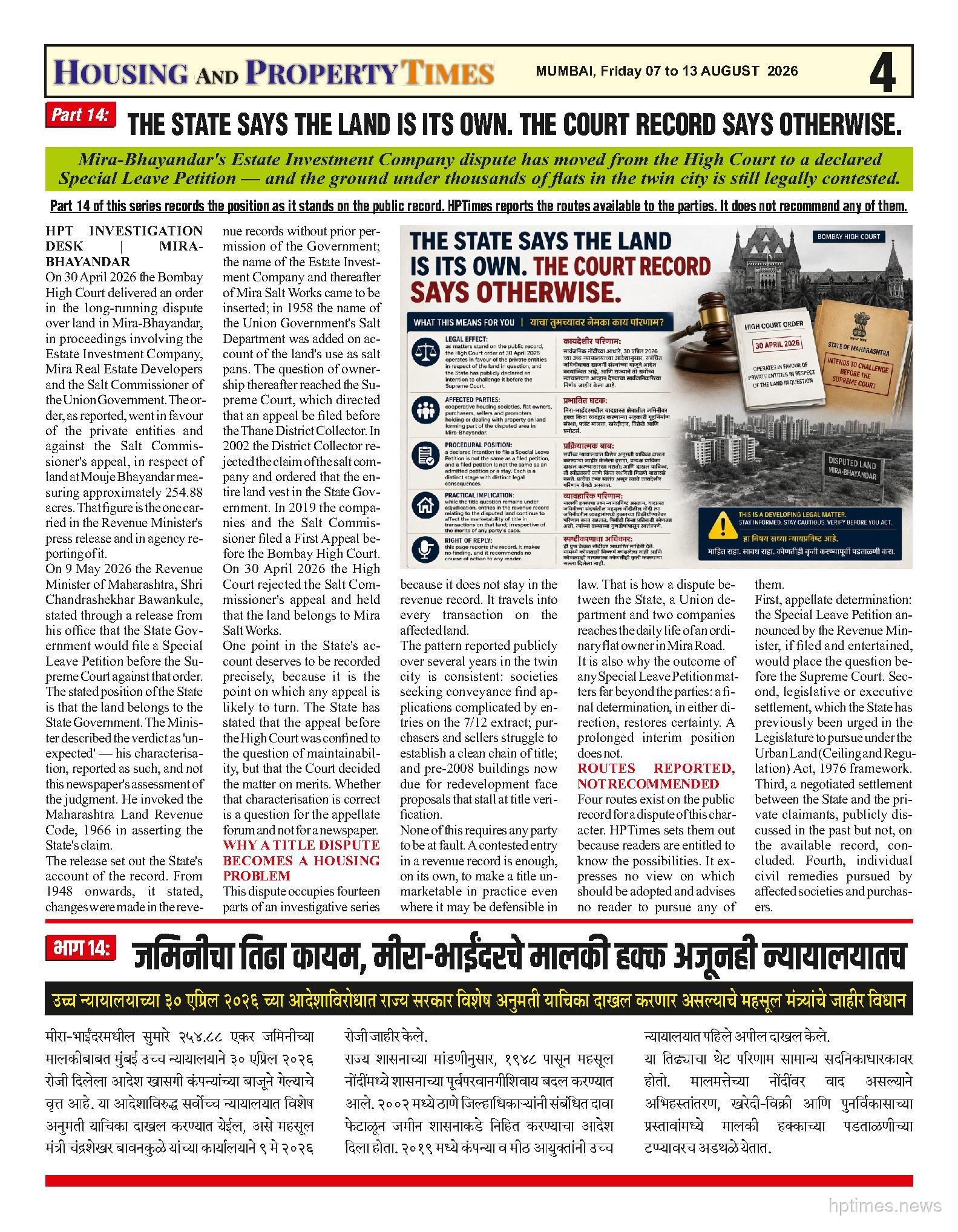
THE STATE SAYS THE LAND IS ITS OWN. THE COURT RECORD SAYS OTHERWISE.
Page 4
THE STATE SAYS THE LAND IS ITS OWN. THE COURT RECORD SAYS OTHERWISE.
 Page 5
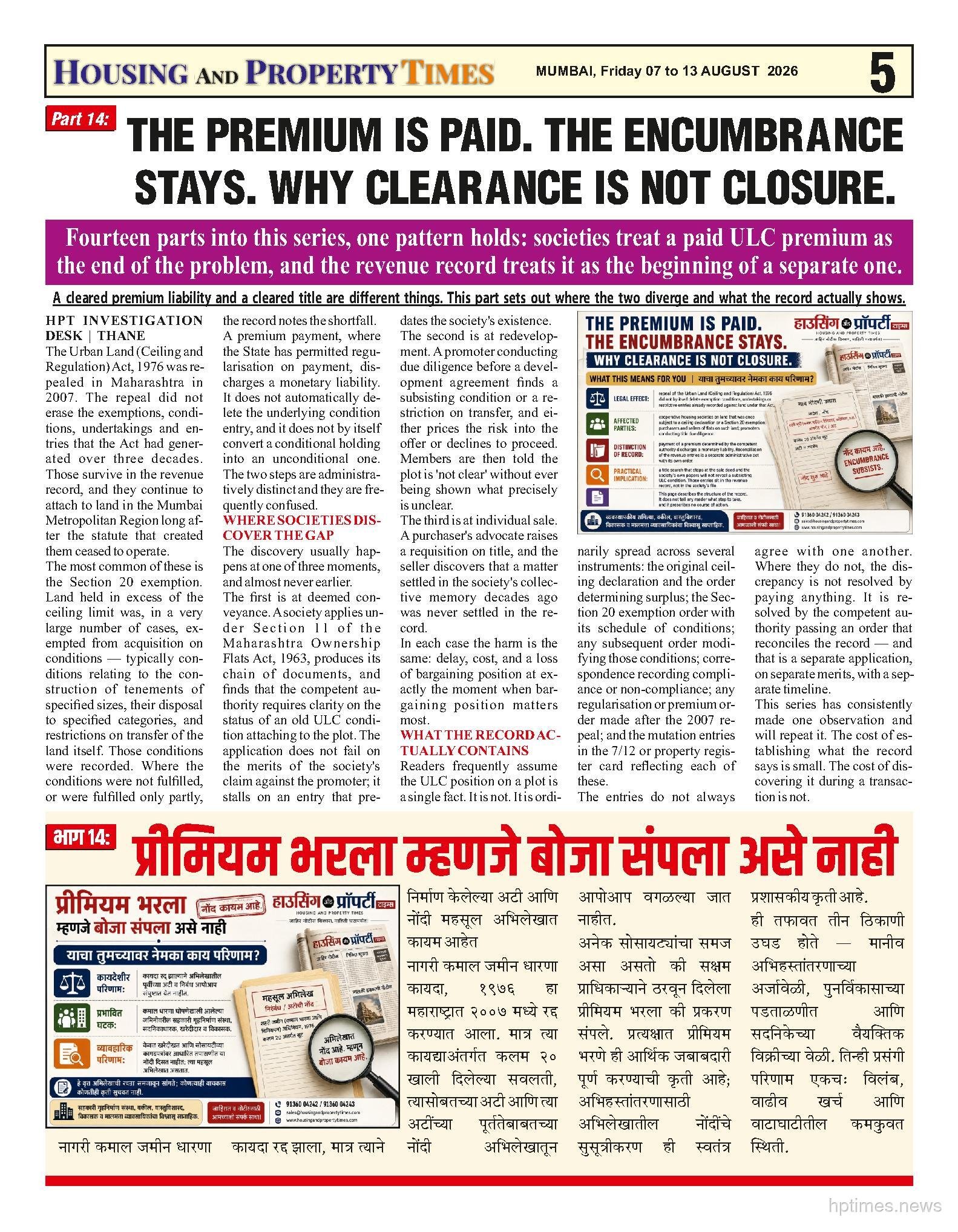
THE PREMIUM IS PAID. THE ENCUMBRANCE STAYS. WHY CLEARANCE IS NOT CLOSURE.
Page 5
THE PREMIUM IS PAID. THE ENCUMBRANCE STAYS. WHY CLEARANCE IS NOT CLOSURE.
 Page 6
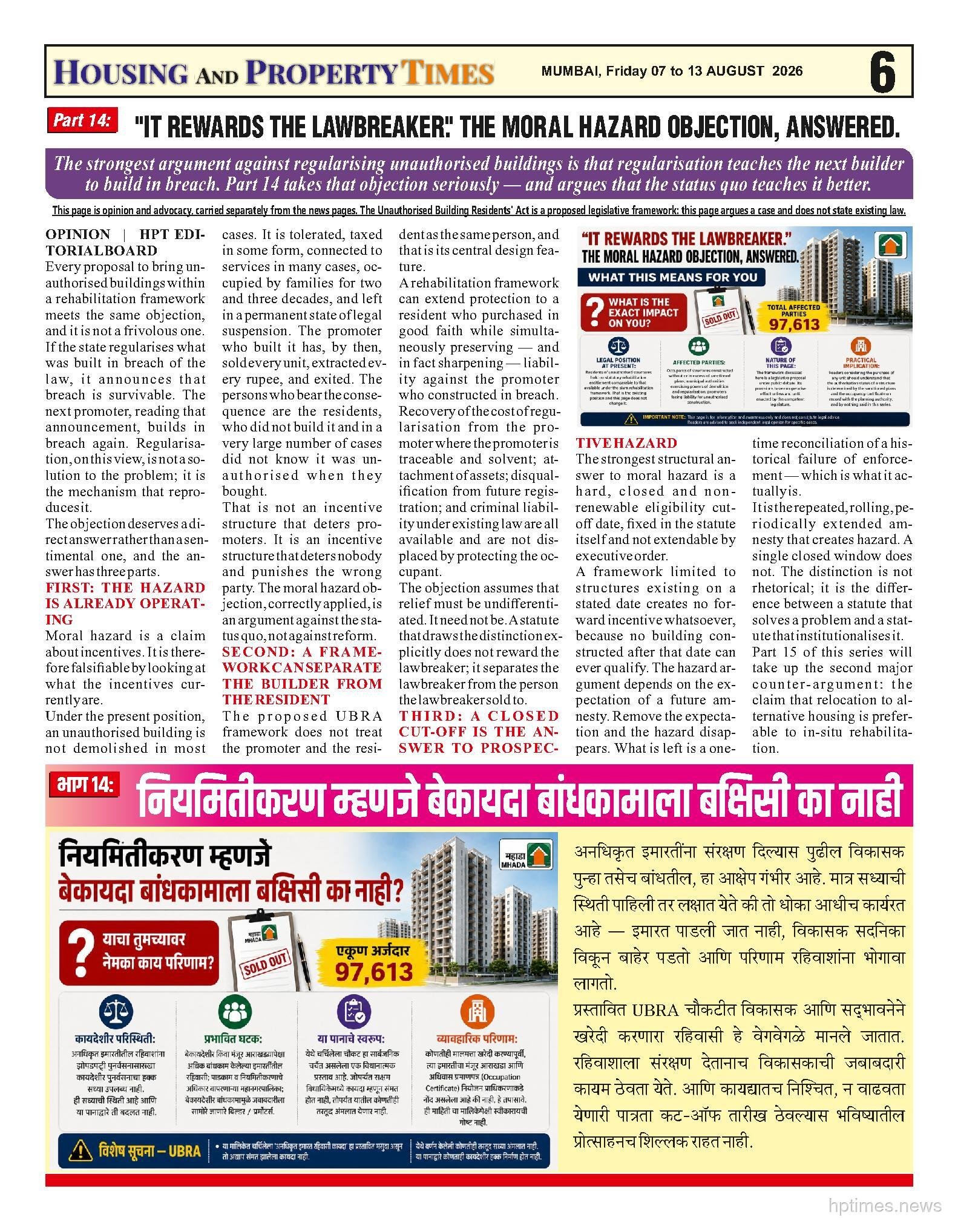
"IT REWARDS THE LAWBREAKER." THE MORAL HAZARD OBJECTION, ANSWERED.
Page 6
"IT REWARDS THE LAWBREAKER." THE MORAL HAZARD OBJECTION, ANSWERED.
 Page 7
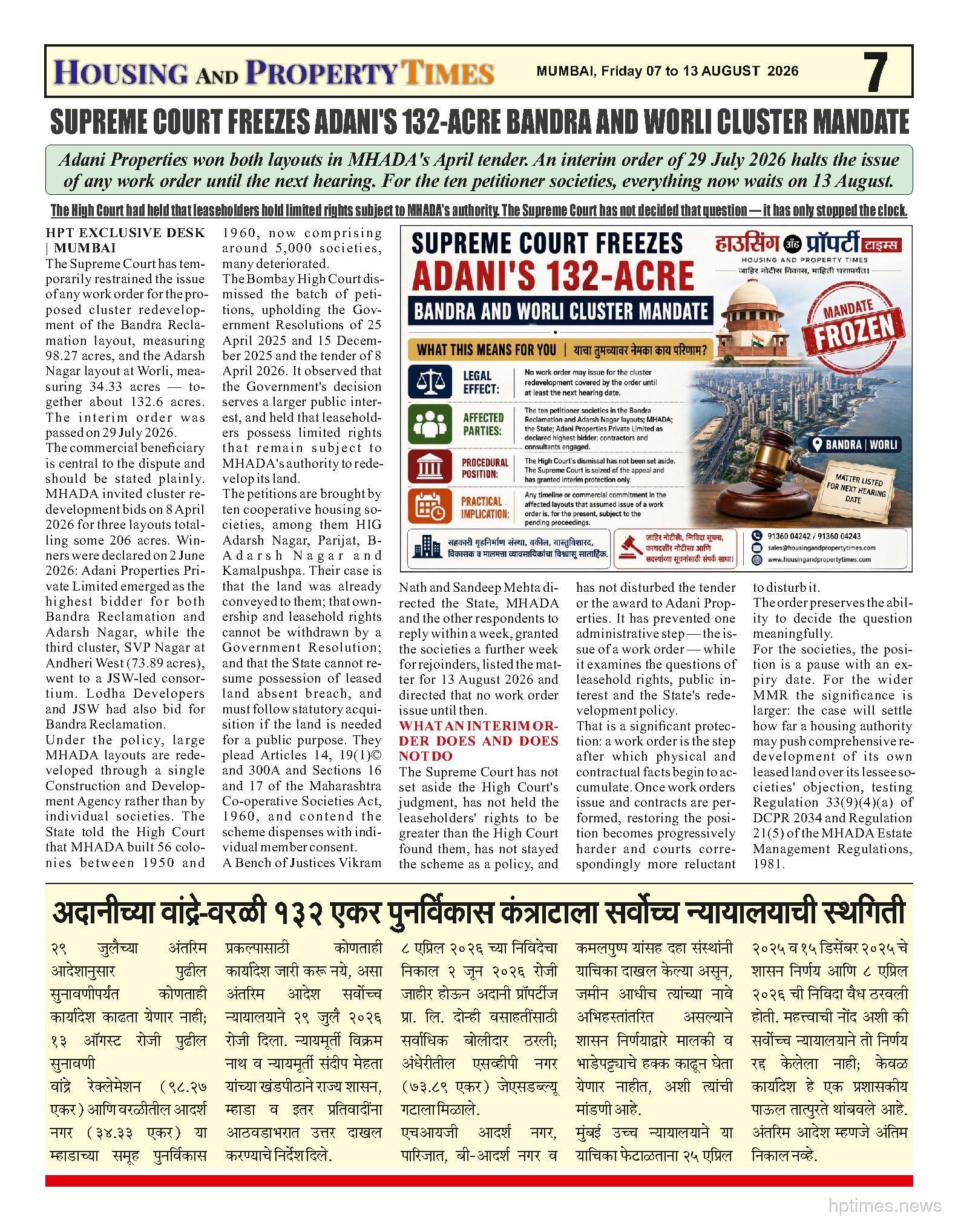
SUPREME COURT FREEZES ADANI'S 132-ACRE BANDRA AND WORLI CLUSTER MANDATE
Page 7
SUPREME COURT FREEZES ADANI'S 132-ACRE BANDRA AND WORLI CLUSTER MANDATE
Comments (0)