📖 View in Flipbook All editions
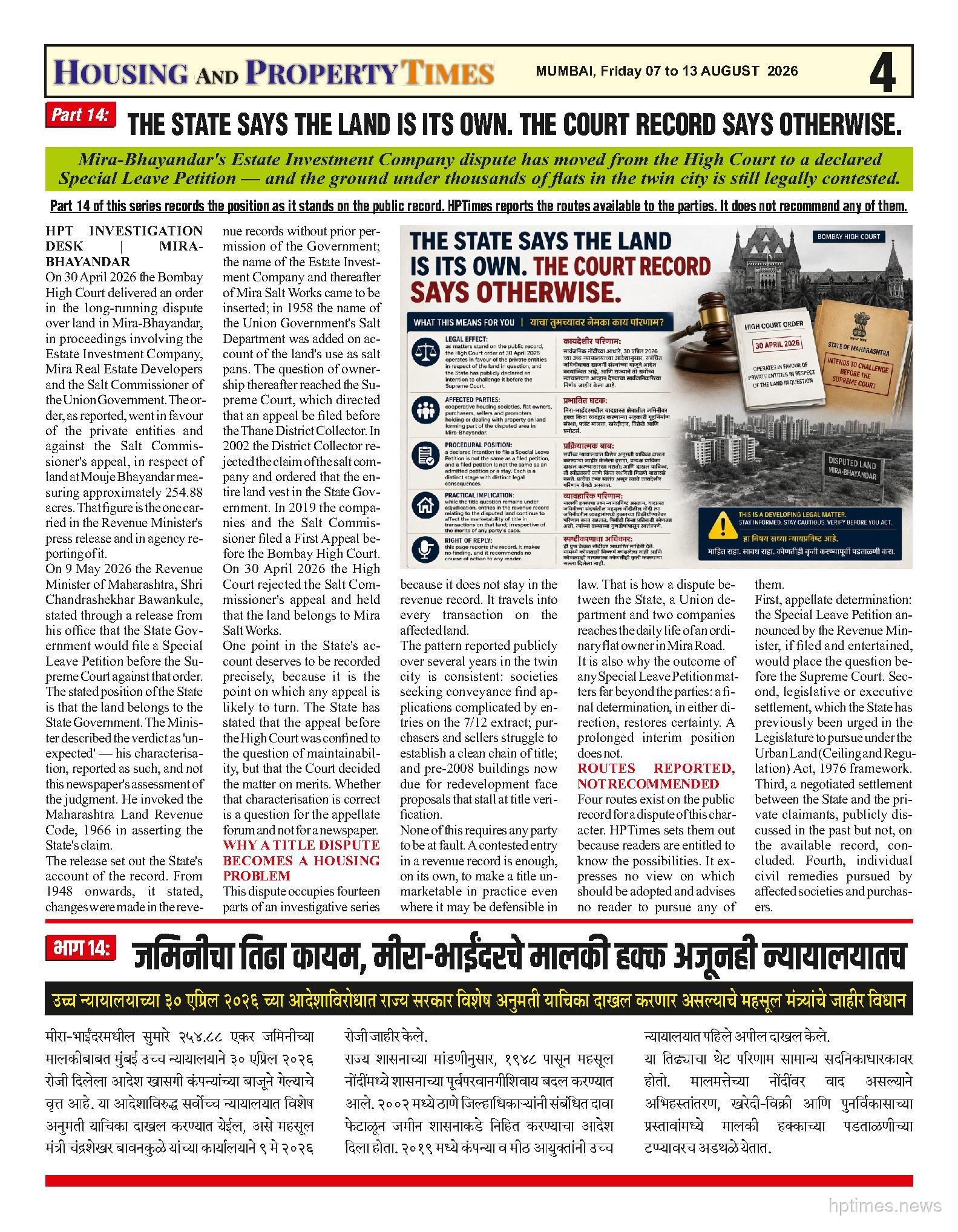
THE STATE SAYS THE LAND IS ITS OWN. THE COURT RECORD SAYS OTHERWISE.
HPT INVESTIGATION DESK | MIRA-BHAYANDAR On 30 April 2026 the Bombay High Court delivered an order in the long-running dispute over land in Mira-Bhayandar, in proceedings involving the Estate Investment Company, Mira Real Estate Developers and the Salt Commissioner of the Union Government. The order, as reported, went in favour of the private entities and against the Salt Commissioner's appeal, in respect of land at Mouje Bhayandar measuring approximately 254.88 acres. That figure is the one carried in the Revenue Minister's press release and in agency reporting of it. On 9 May 2026 the Revenue Minister of Maharashtra, Shri Chandrashekhar Bawankule, stated through a release from his office that the State Government would file a Special Leave Petition before the Supreme Court against that order. The stated position of the State is that the land belongs to the State Government. The Minister described the verdict as 'unexpected' — his characterisation, reported as such, and not this newspaper's assessment of the judgment. He invoked the Maharashtra Land Revenue Code, 1966 in asserting the State's claim. The release set out the State's account of the record. From 1948 onwards, it stated, changes were made in the revenue records without prior permission of the Government; the name of the Estate Investment Company and thereafter of Mira Salt Works came to be inserted; in 1958 the name of the Union Government's Salt Department was added on account of the land's use as salt pans. The question of ownership thereafter reached the Supreme Court, which directed that an appeal be filed before the Thane District Collector. In 2002 the District Collector rejected the claim of the salt company and ordered that the entire land vest in the State Government. In 2019 the companies and the Salt Commissioner filed a First Appeal before the Bombay High Court. On 30 April 2026 the High Court rejected the Salt Commissioner's appeal and held that the land belongs to Mira Salt Works. One point in the State's account deserves to be recorded precisely, because it is the point on which any appeal is likely to turn. The State has stated that the appeal before the High Court was confined to the question of maintainability, but that the Court decided the matter on merits. Whether that characterisation is correct is a question for the appellate forum and not for a newspaper. This dispute occupies fourteen parts of an investigative series because it does not stay in the revenue record. It travels into every transaction on the affected land. The pattern reported publicly over several years in the twin city is consistent: societies seeking conveyance find applications complicated by entries on the 7/12 extract; purchasers and sellers struggle to establish a clean chain of title; and pre-2008 buildings now due for redevelopment face proposals that stall at title verification. None of this requires any party to be at fault. A contested entry in a revenue record is enough, on its own, to make a title unmarketable in practice even where it may be defensible in law. That is how a dispute between the State, a Union department and two companies reaches the daily life of an ordinary flat owner in Mira Road. It is also why the outcome of any Special Leave Petition matters far beyond the parties: a final determination, in either direction, restores certainty. A prolonged interim position does not. Four routes exist on the public record for a dispute of this character. HPTimes sets them out because readers are entitled to know the possibilities. It expresses no view on which should be adopted and advises no reader to pursue any of them. First, appellate determination: the Special Leave Petition announced by the Revenue Minister, if filed and entertained, would place the question before the Supreme Court. Second, legislative or executive settlement, which the State has previously been urged in the Legislature to pursue under the Urban Land (Ceiling and Regulation) Act, 1976 framework. Third, a negotiated settlement between the State and the private claimants, publicly discussed in the past but not, on the available record, concluded. Fourth, individual civil remedies pursued by affected societies and purchasers.
React
More from this issue & web
 Page 1
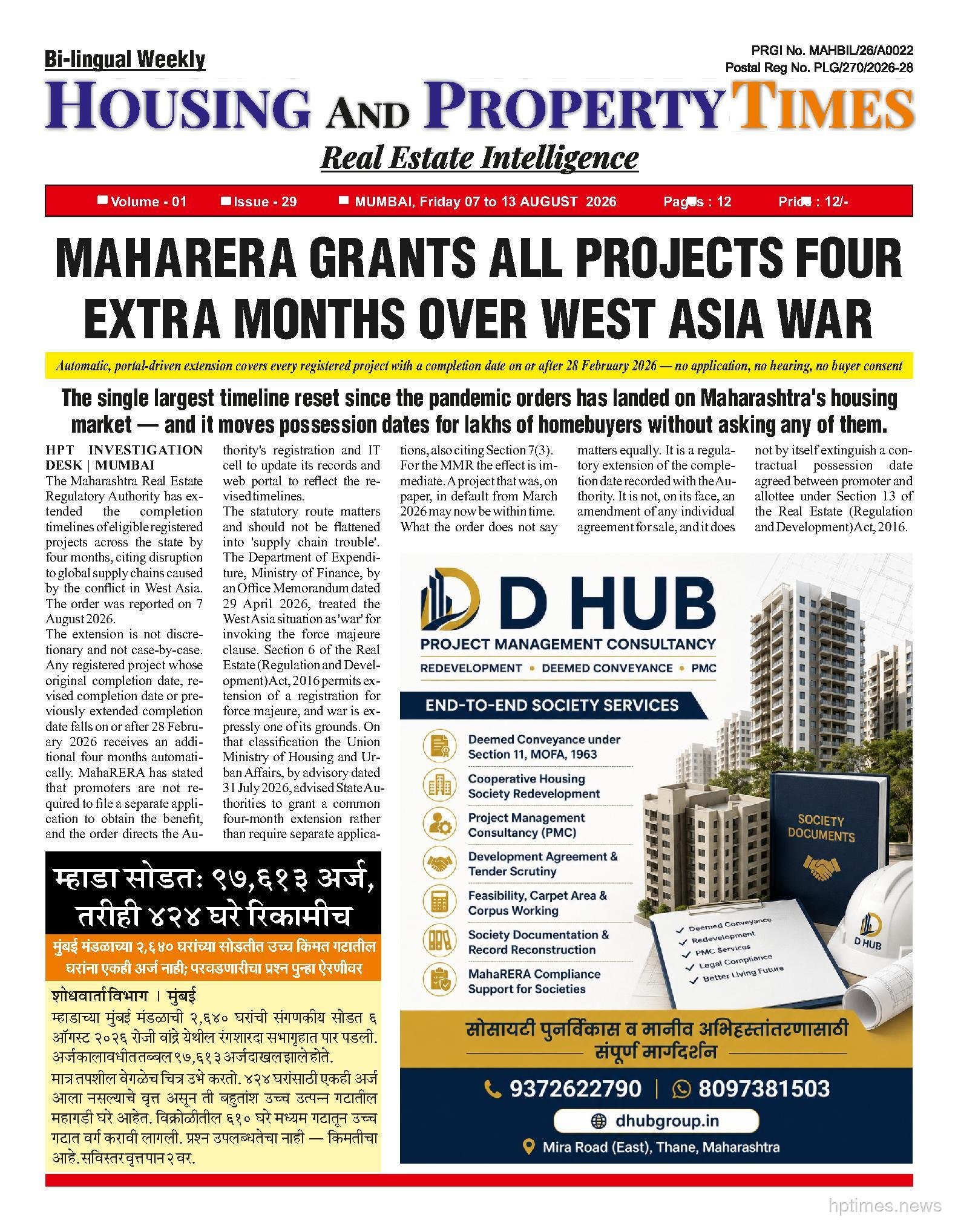
MAHARERA GRANTS ALL PROJECTS FOUR EXTRA MONTHS OVER WEST ASIA WAR
Page 1
MAHARERA GRANTS ALL PROJECTS FOUR EXTRA MONTHS OVER WEST ASIA WAR
 Page 2
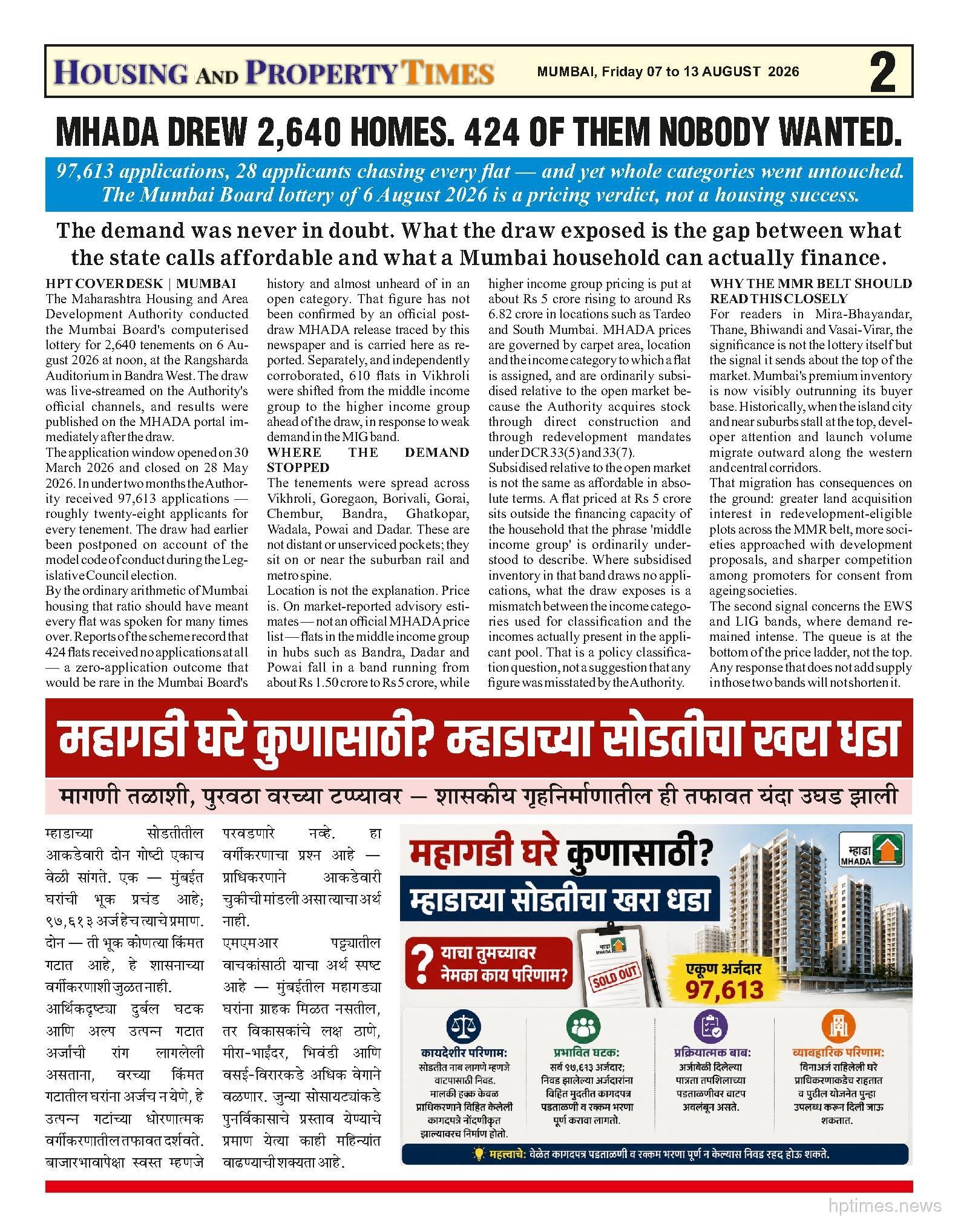
MHADA DREW 2,640 HOMES. 424 OF THEM NOBODY WANTED.
Page 2
MHADA DREW 2,640 HOMES. 424 OF THEM NOBODY WANTED.
 Page 3
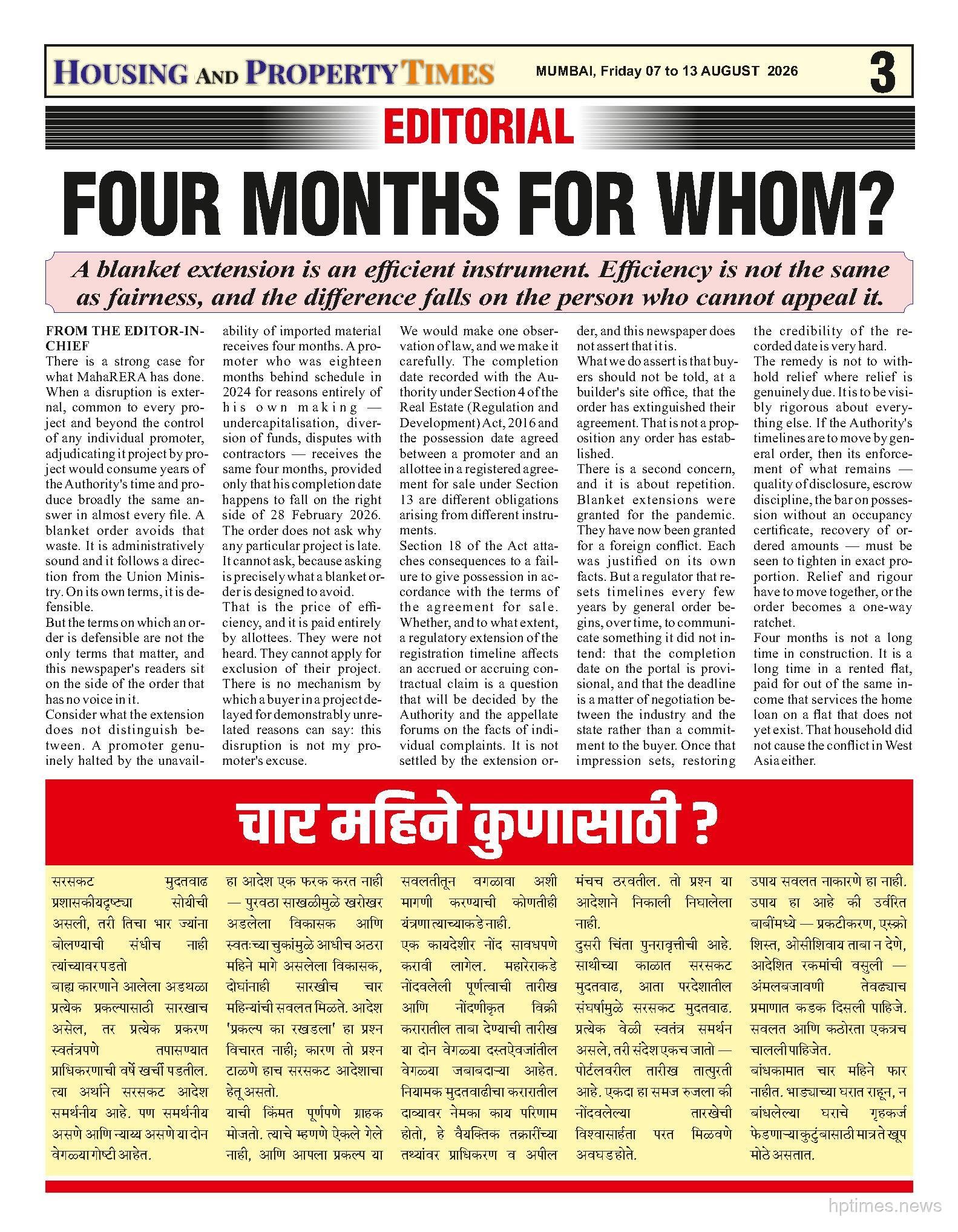
FOUR MONTHS FOR WHOM?
Page 3
FOUR MONTHS FOR WHOM?
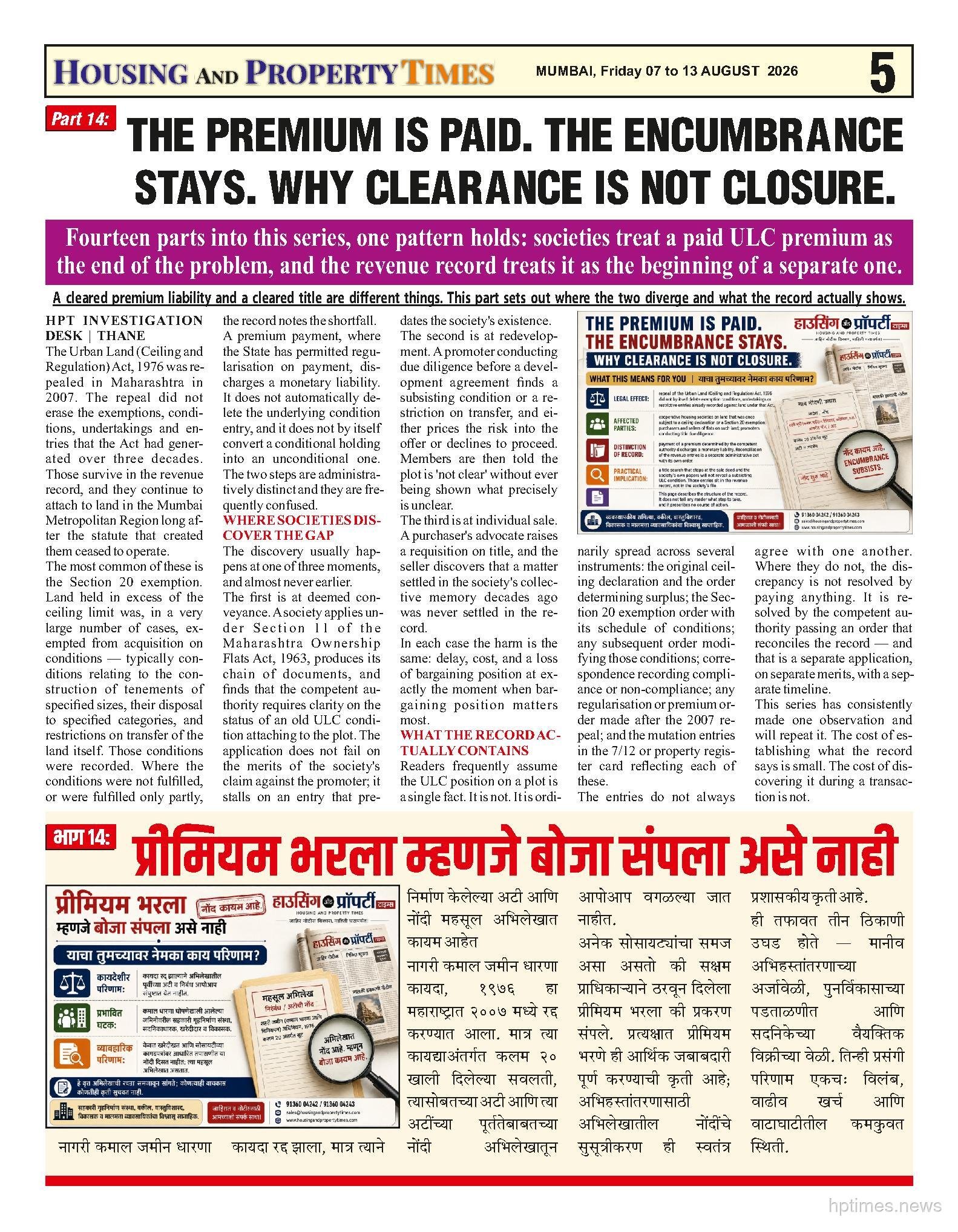 Page 5
THE PREMIUM IS PAID. THE ENCUMBRANCE STAYS. WHY CLEARANCE IS NOT CLOSURE.
Page 5
THE PREMIUM IS PAID. THE ENCUMBRANCE STAYS. WHY CLEARANCE IS NOT CLOSURE.
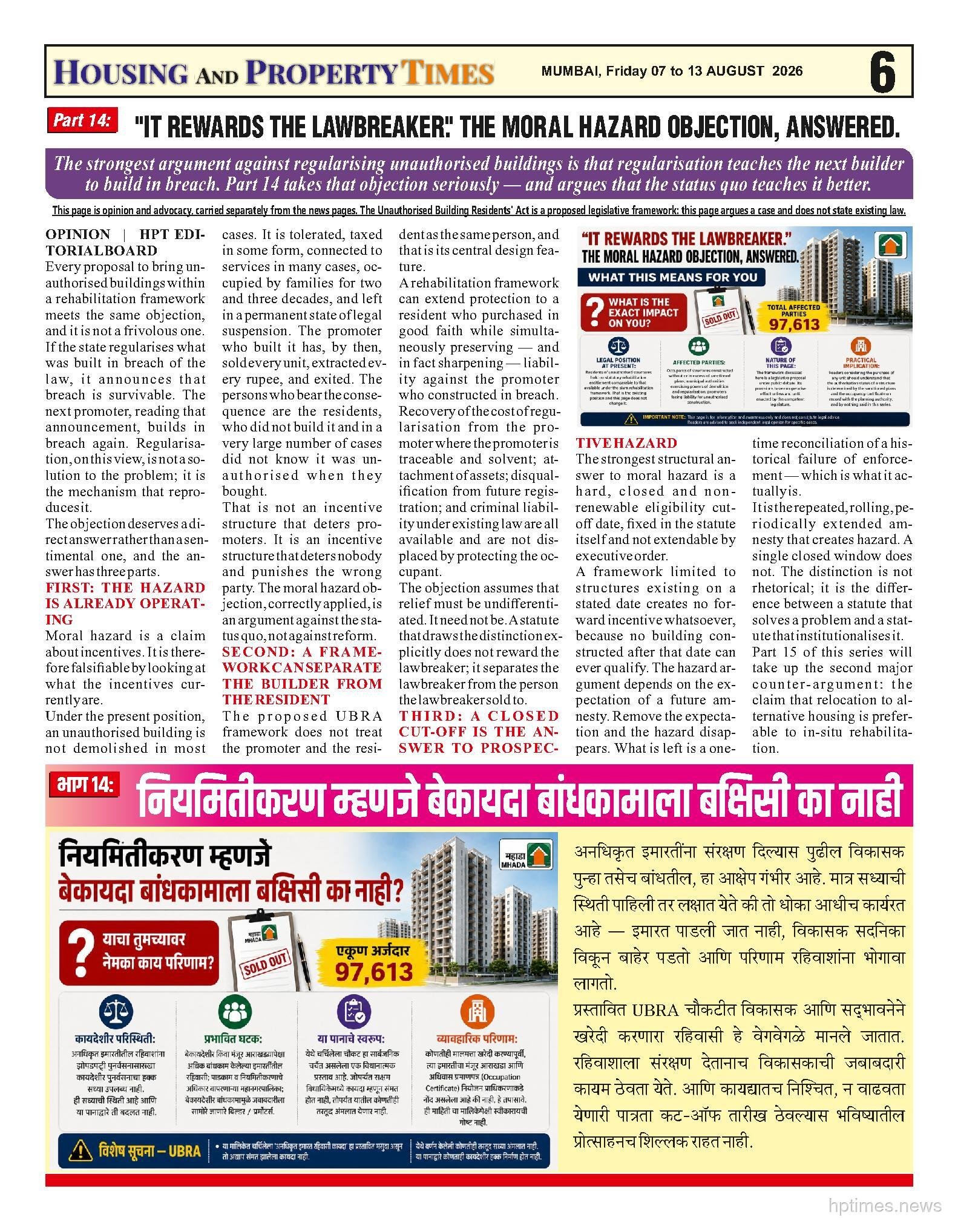 Page 6
"IT REWARDS THE LAWBREAKER." THE MORAL HAZARD OBJECTION, ANSWERED.
Page 6
"IT REWARDS THE LAWBREAKER." THE MORAL HAZARD OBJECTION, ANSWERED.
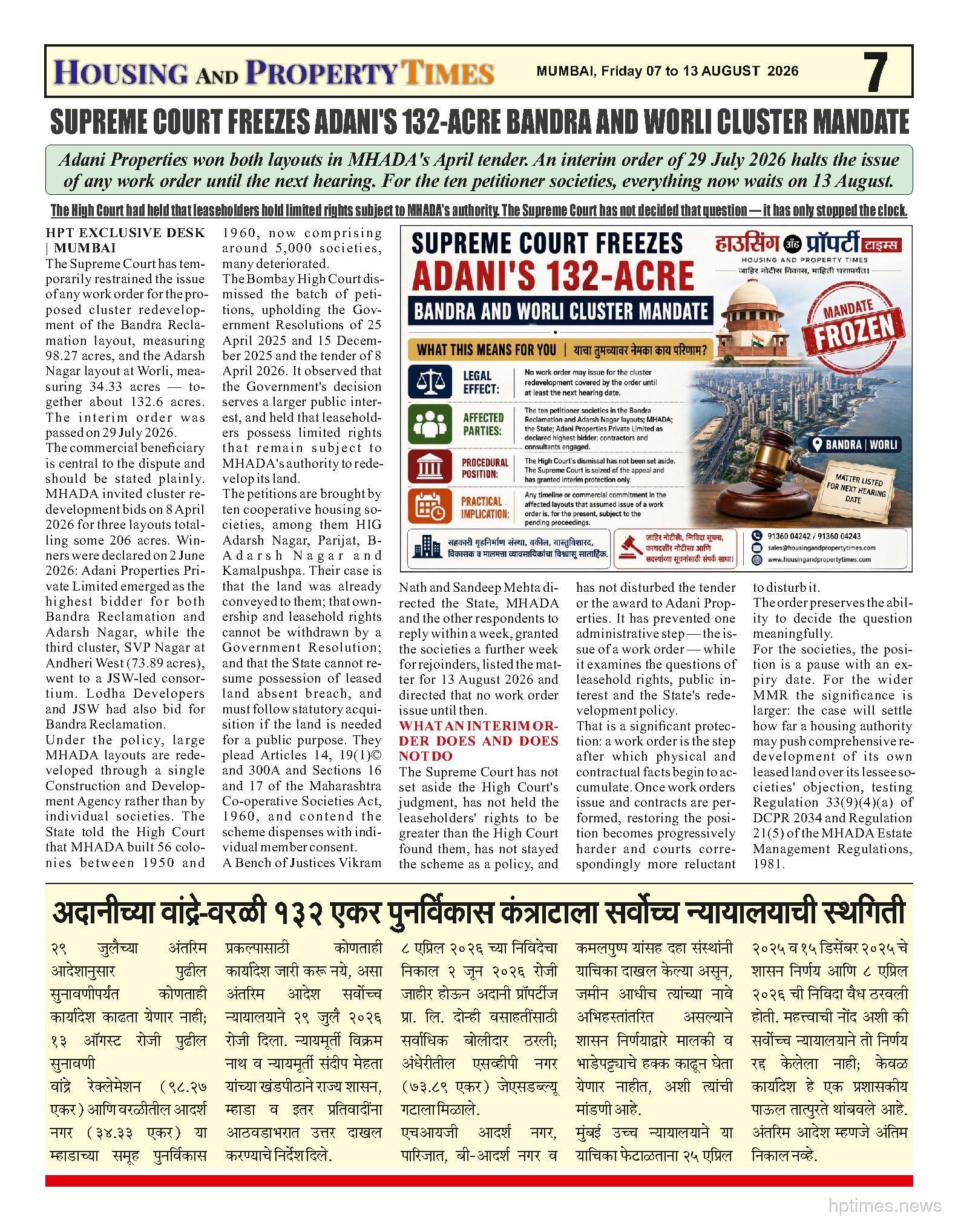 Page 7
SUPREME COURT FREEZES ADANI'S 132-ACRE BANDRA AND WORLI CLUSTER MANDATE
Page 7
SUPREME COURT FREEZES ADANI'S 132-ACRE BANDRA AND WORLI CLUSTER MANDATE
Comments (0)