📖 View in Flipbook All editions
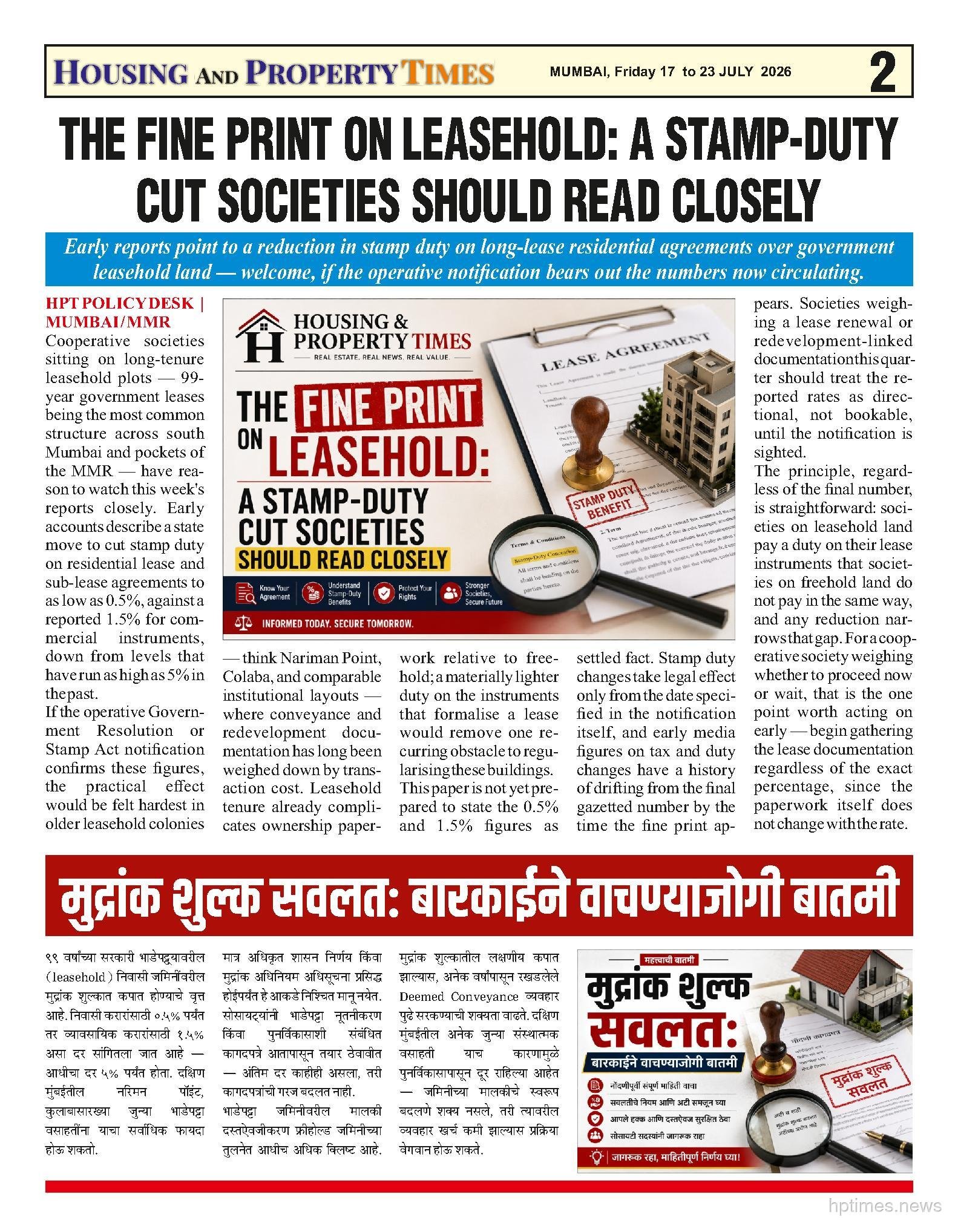
THE FINE PRINT ON LEASEHOLD: A STAMP-DUTY CUT SOCIETIES SHOULD READ CLOSELY
HPT POLICY DESK | MUMBAI / MMR Cooperative societies sitting on long-tenure leasehold plots — 99-year government leases being the most common structure across south Mumbai and pockets of the MMR — have reason to watch this week's reports closely. Early accounts describe a state move to cut stamp duty on residential lease and sub-lease agreements to as low as 0.5%, against a reported 1.5% for commercial instruments, down from levels that have run as high as 5% in the past. If the operative Government Resolution or Stamp Act notification confirms these figures, the practical effect would be felt hardest in older leasehold colonies — think Nariman Point, Colaba, and comparable institutional layouts — where conveyance and redevelopment documentation has long been weighed down by transaction cost. Leasehold tenure already complicates ownership paperwork relative to freehold; a materially lighter duty on the instruments that formalise a lease would remove one recurring obstacle to regularising these buildings. This paper is not yet prepared to state the 0.5% and 1.5% figures as settled fact. Stamp duty changes take legal effect only from the date specified in the notification itself, and early media figures on tax and duty changes have a history of drifting from the final gazetted number by the time the fine print appears. Societies weighing a lease renewal or redevelopment-linked documentation this quarter should treat the reported rates as directional, not bookable, until the notification is sighted. The principle, regardless of the final number, is straightforward: societies on leasehold land pay a duty on their lease instruments that societies on freehold land do not pay in the same way, and any reduction narrows that gap. For a cooperative society weighing whether to proceed now or wait, that is the one point worth acting on early — begin gathering the lease documentation regardless of the exact percentage, since the paperwork itself does not change with the rate.
React
More from this issue & web
 Page 1
FEDERATION MUST PAY UP, THEN LET GO: COURT POINTS TO TWO-WEEK WINDOW ON REDEVELOPMENT NOC
Page 1
FEDERATION MUST PAY UP, THEN LET GO: COURT POINTS TO TWO-WEEK WINDOW ON REDEVELOPMENT NOC
 Page 3
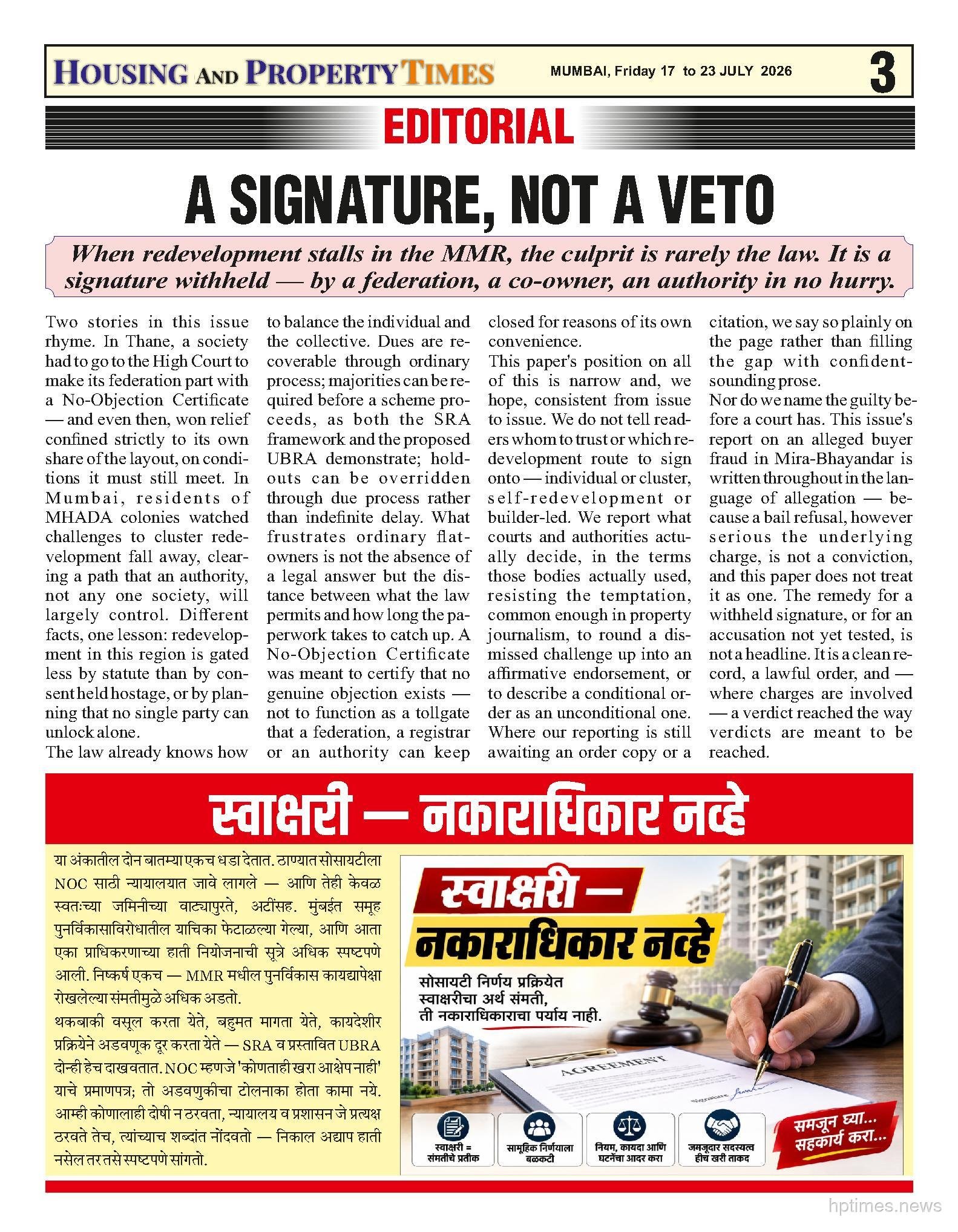
WHY LAND REFORM FREED MAHARASHTRA BUT NOT MIRA-BHAYANDAR
Page 3
WHY LAND REFORM FREED MAHARASHTRA BUT NOT MIRA-BHAYANDAR
 Page 4
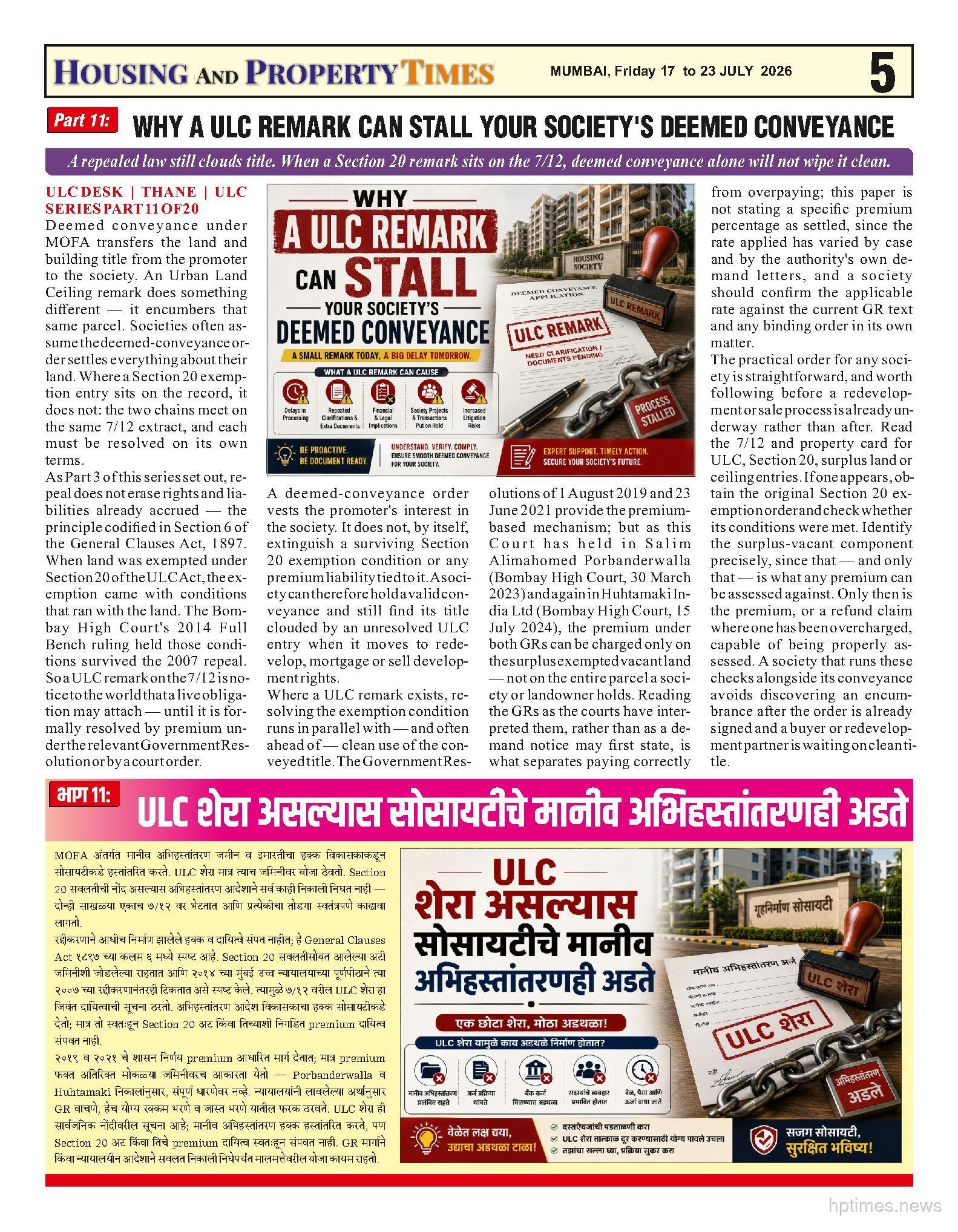
WHY A ULC REMARK CAN STALL YOUR SOCIETY'S DEEMED CONVEYANCE
Page 4
WHY A ULC REMARK CAN STALL YOUR SOCIETY'S DEEMED CONVEYANCE
 Page 5
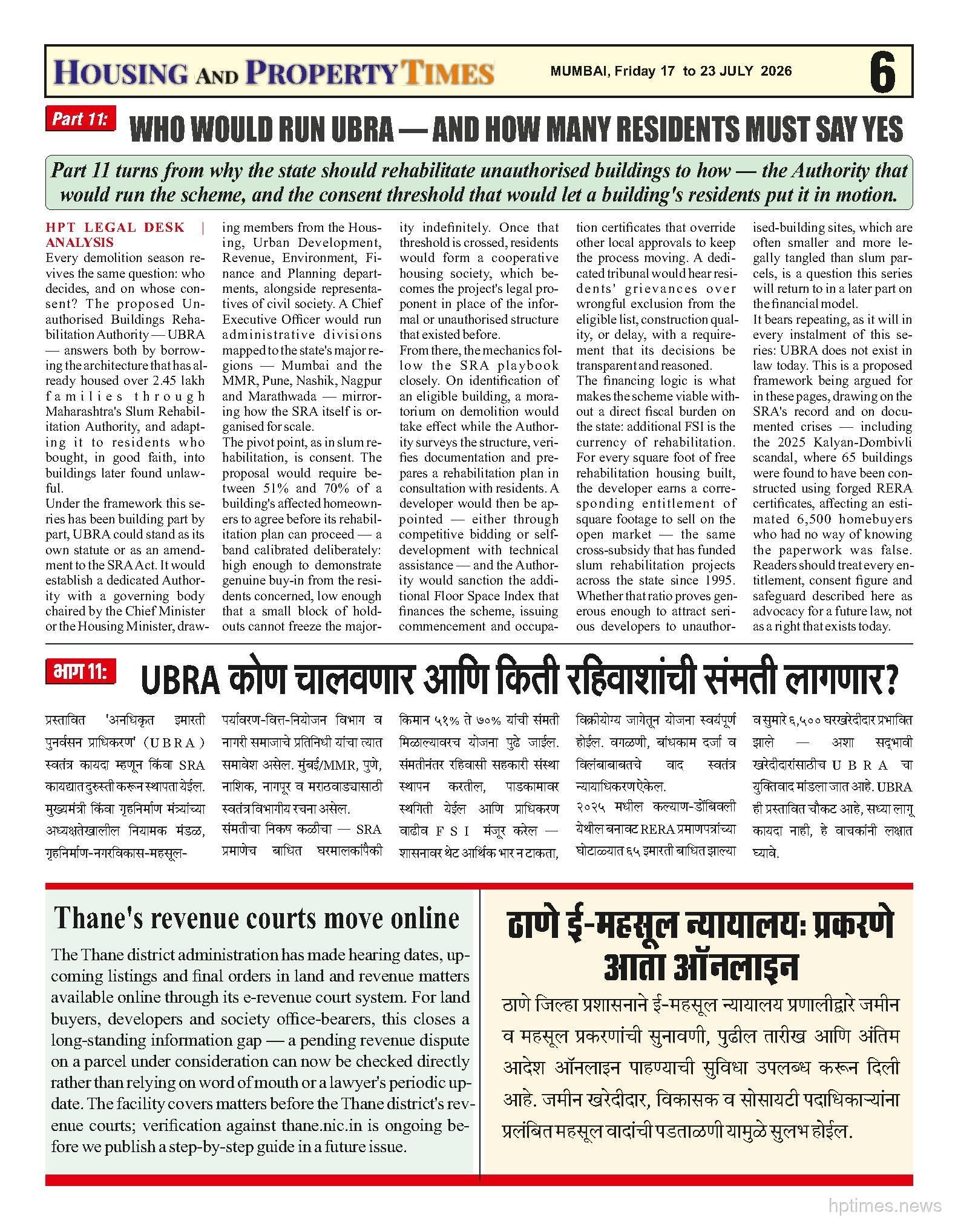
WHO WOULD RUN UBRA — AND HOW MANY RESIDENTS MUST SAY YES
Page 5
WHO WOULD RUN UBRA — AND HOW MANY RESIDENTS MUST SAY YES
 Page 6
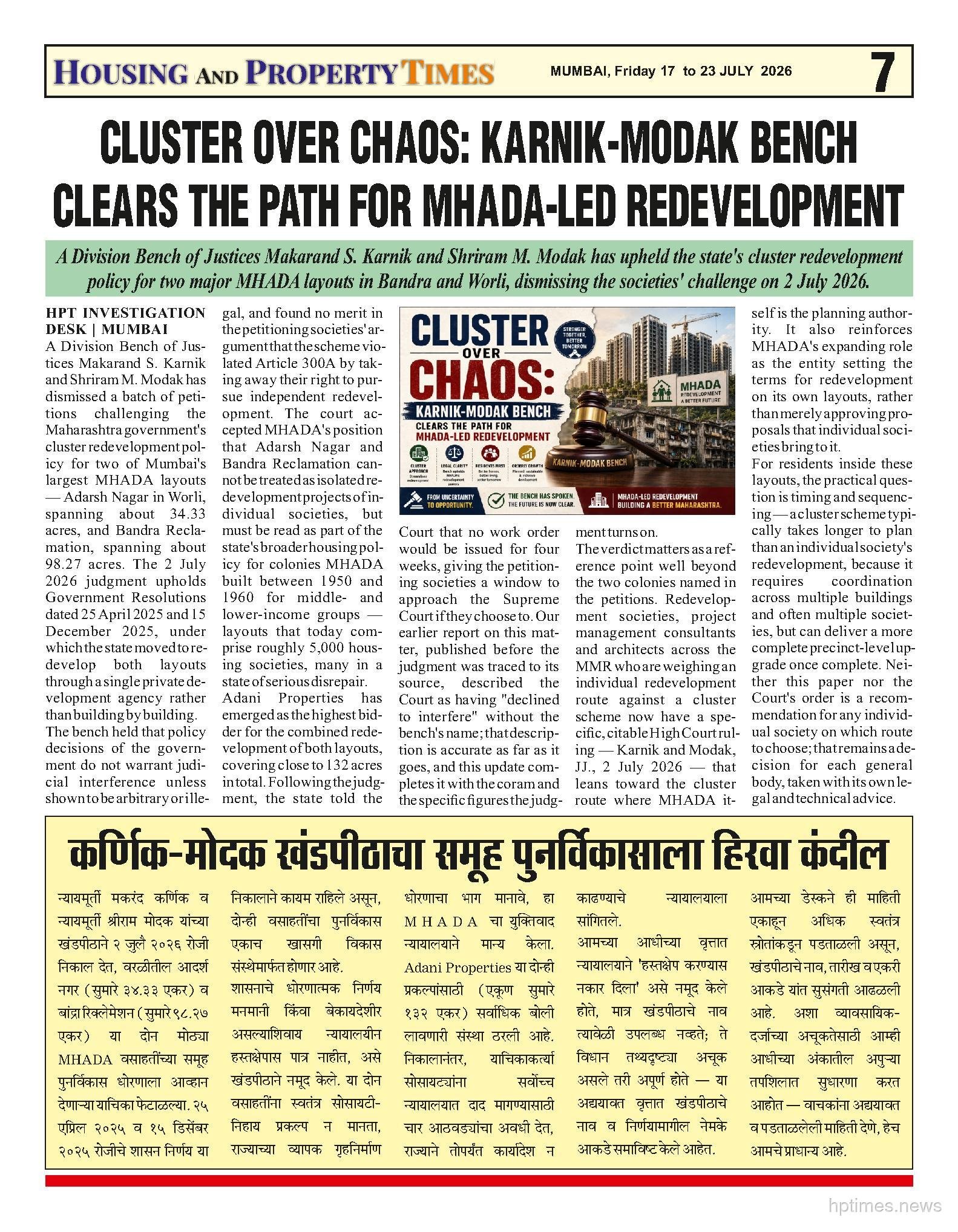
CLUSTER OVER CHAOS: KARNIK-MODAK BENCH CLEARS THE PATH FOR MHADA-LED REDEVELOPMENT
Page 6
CLUSTER OVER CHAOS: KARNIK-MODAK BENCH CLEARS THE PATH FOR MHADA-LED REDEVELOPMENT
 Page 7
A SIGNATURE, NOT A VETO
Page 7
A SIGNATURE, NOT A VETO
Comments (0)