📖 View in Flipbook All editions
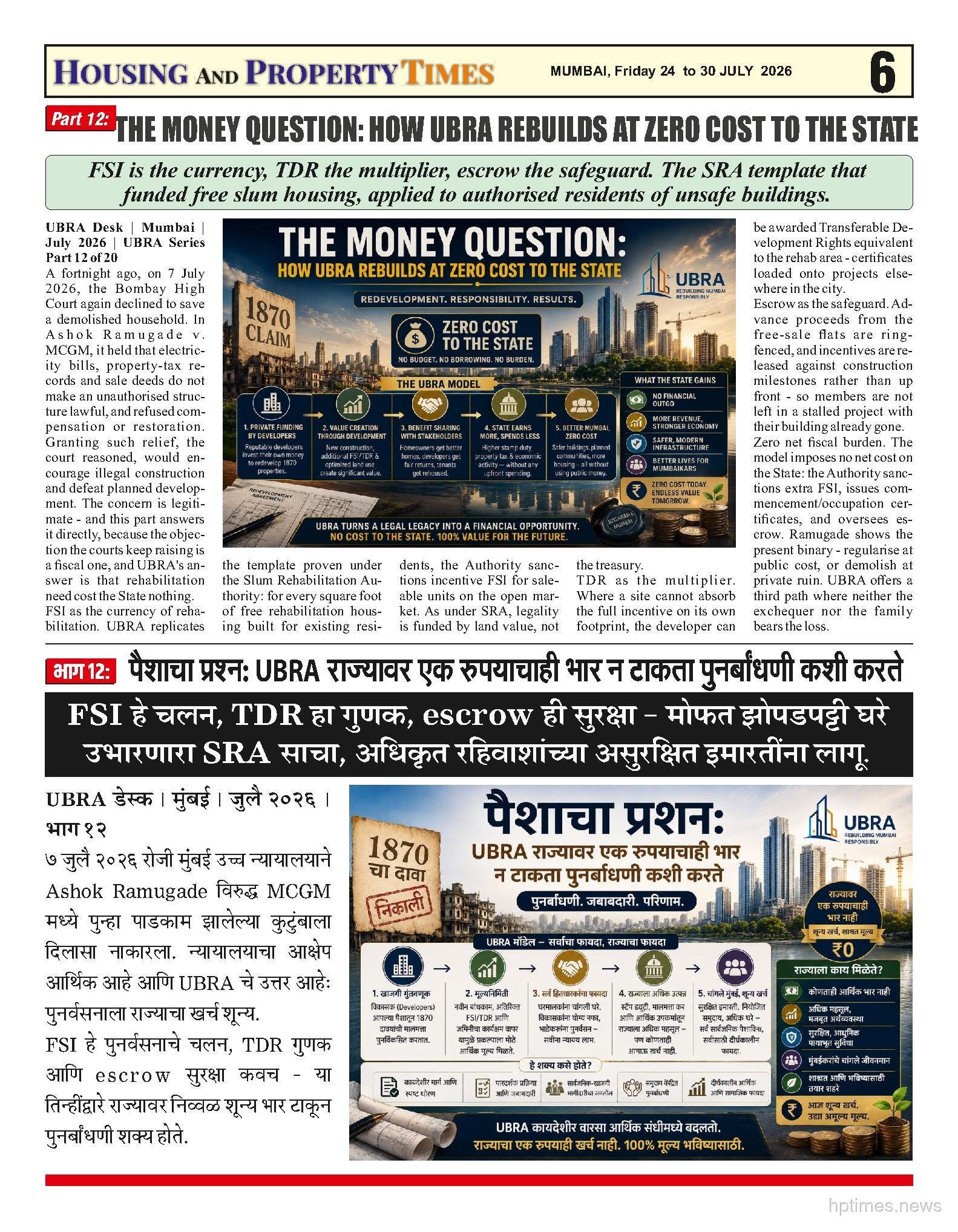
THE MONEY QUESTION: HOW UBRA REBUILDS AT ZERO COST TO THE STATE
UBRA राज्यावर एक रुपयाचाही भार न टाकता पुनर्बांधणी कशी करते A fortnight ago, on 7 July 2026, the Bombay High Court again declined to save a demolished household. In Ashok Ramugade v. MCGM, it held that electricity bills, property-tax records and sale deeds do not make an unauthorised structure lawful, and refused compensation or restoration. Granting such relief, the court reasoned, would encourage illegal construction and defeat planned development. The concern is legitimate - and this part answers it directly, because the objection the courts keep raising is a fiscal one, and UBRA's answer is that rehabilitation need cost the State nothing. FSI as the currency of rehabilitation. UBRA replicates the template proven under the Slum Rehabilitation Authority: for every square foot of free rehabilitation housing built for existing residents, the Authority sanctions incentive FSI for saleable units on the open market. As under SRA, legality is funded by land value, not the treasury. TDR as the multiplier. Where a site cannot absorb the full incentive on its own footprint, the developer can be awarded Transferable Development Rights equivalent to the rehab area - certificates loaded onto projects elsewhere in the city. Escrow as the safeguard. Advance proceeds from the free-sale flats are ring-fenced, and incentives are released against construction milestones rather than up front - so members are not left in a stalled project with their building already gone. Zero net fiscal burden. The model imposes no net cost on the State: the Authority sanctions extra FSI, issues commencement/occupation certificates, and oversees escrow. Ramugade shows the present binary - regularise at public cost, or demolish at private ruin. UBRA offers a third path where neither the exchequer nor the family bears the loss.
React
More from this issue & web
 Page 1
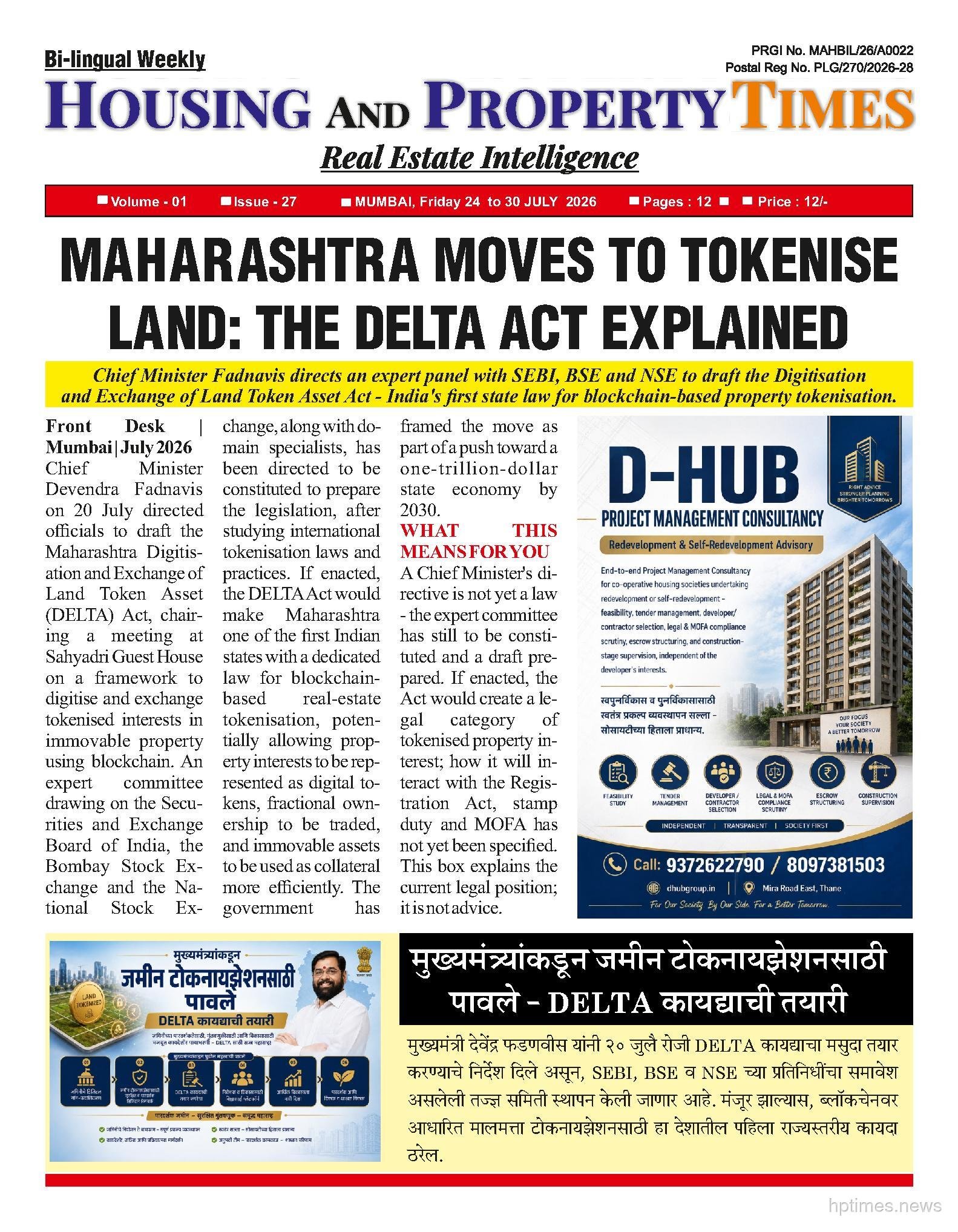
MAHARASHTRA MOVES TO TOKENISE LAND: THE DELTA ACT EXPLAINED
Page 1
MAHARASHTRA MOVES TO TOKENISE LAND: THE DELTA ACT EXPLAINED
 Page 2
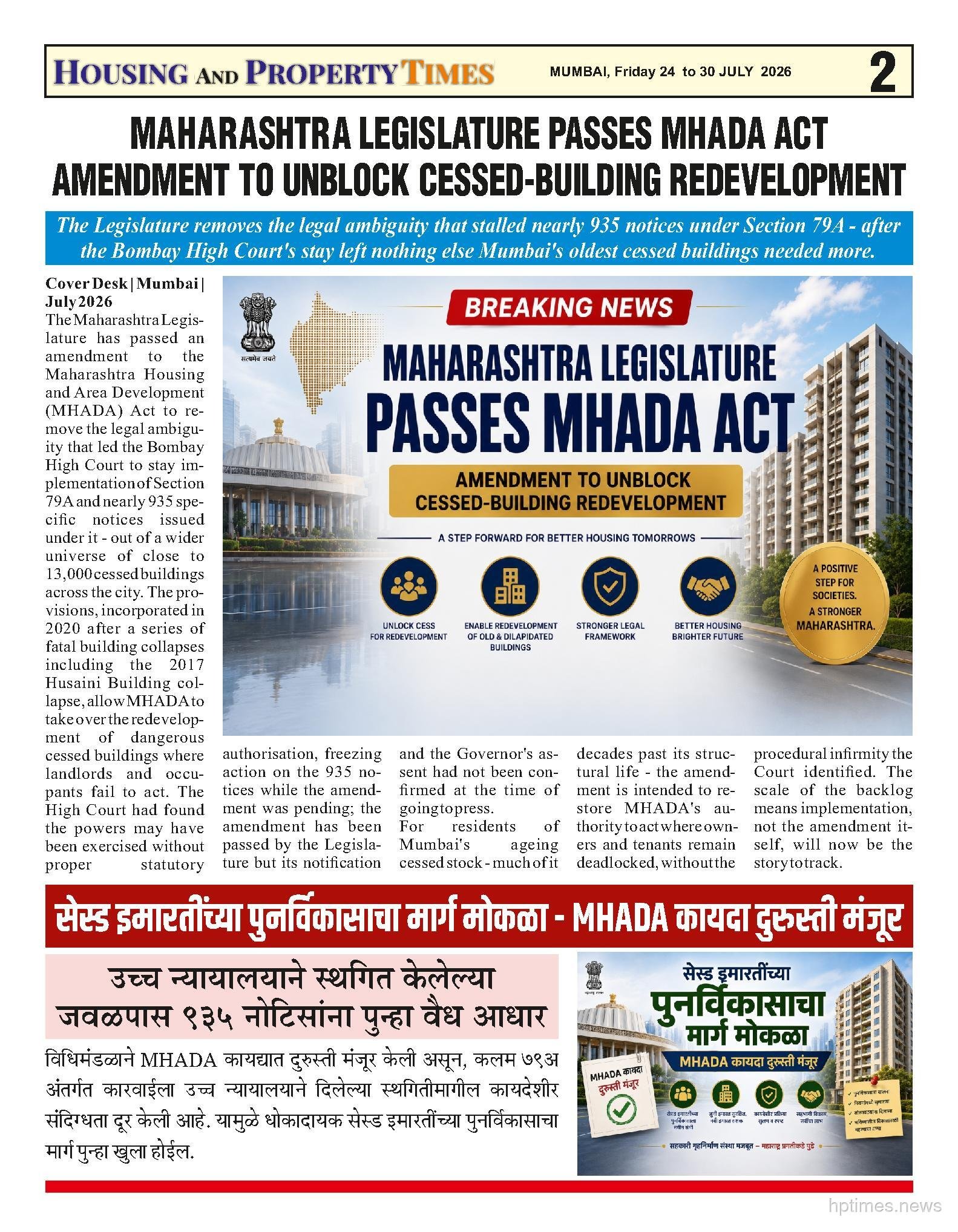
MAHARASHTRA LEGISLATURE PASSES MHADA ACT AMENDMENT TO UNBLOCK CESSED-BUILDING REDEVELOPMENT
Page 2
MAHARASHTRA LEGISLATURE PASSES MHADA ACT AMENDMENT TO UNBLOCK CESSED-BUILDING REDEVELOPMENT
 Page 3
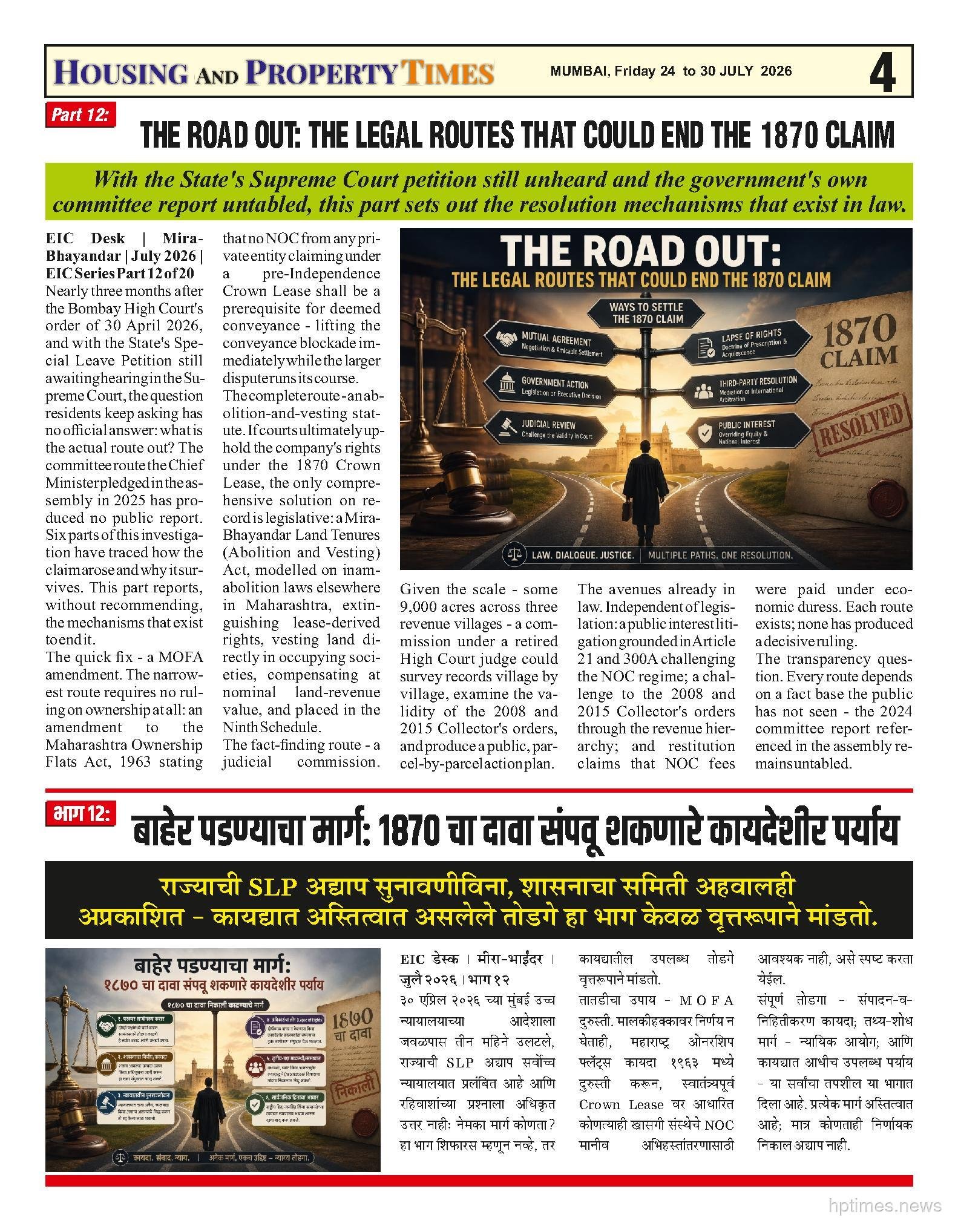
THE ROAD OUT: THE LEGAL ROUTES THAT COULD END THE 1870 CLAIM
Page 3
THE ROAD OUT: THE LEGAL ROUTES THAT COULD END THE 1870 CLAIM
 Page 4
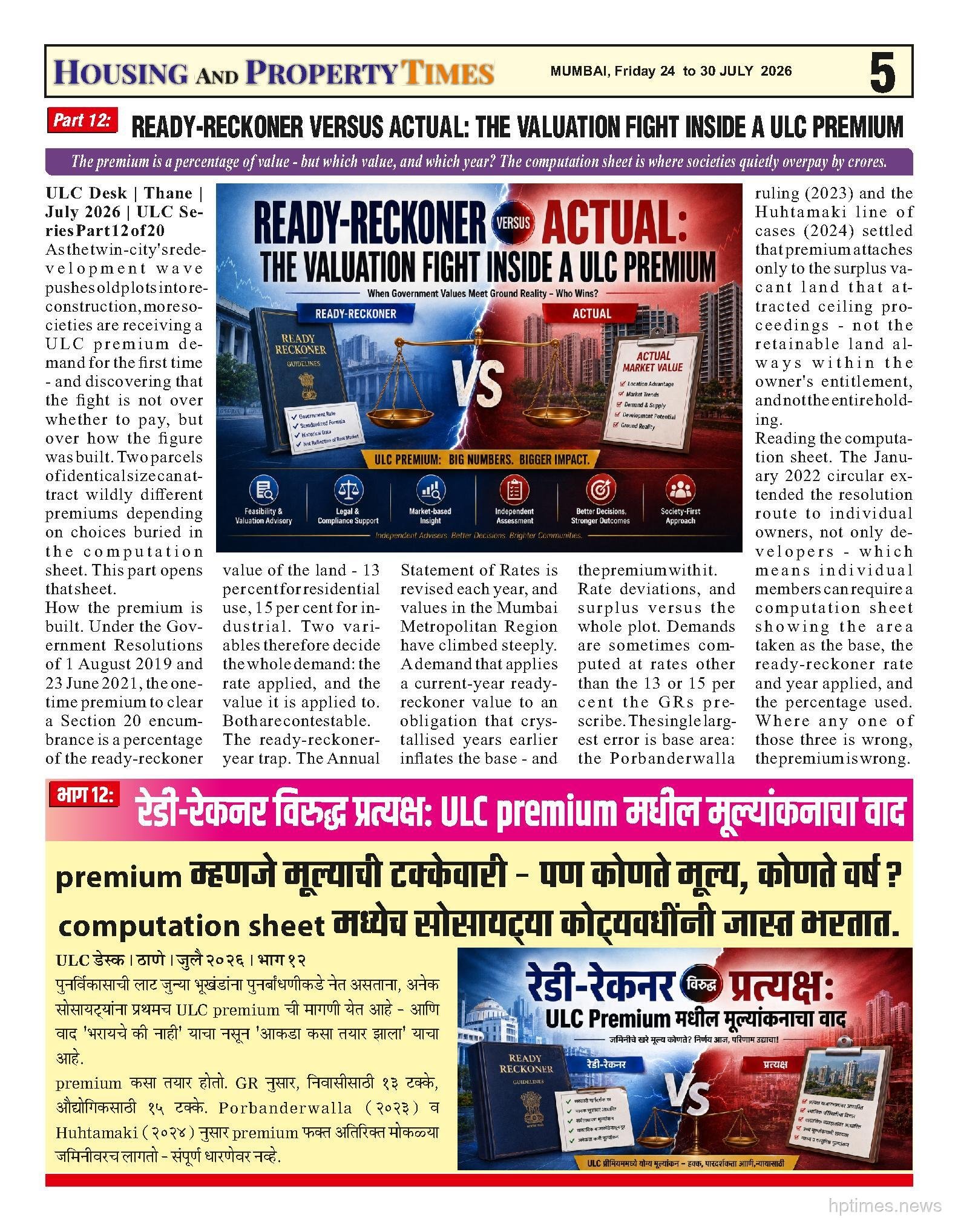
READY-RECKONER VERSUS ACTUAL: THE VALUATION FIGHT INSIDE A ULC PREMIUM
Page 4
READY-RECKONER VERSUS ACTUAL: THE VALUATION FIGHT INSIDE A ULC PREMIUM
 Page 6
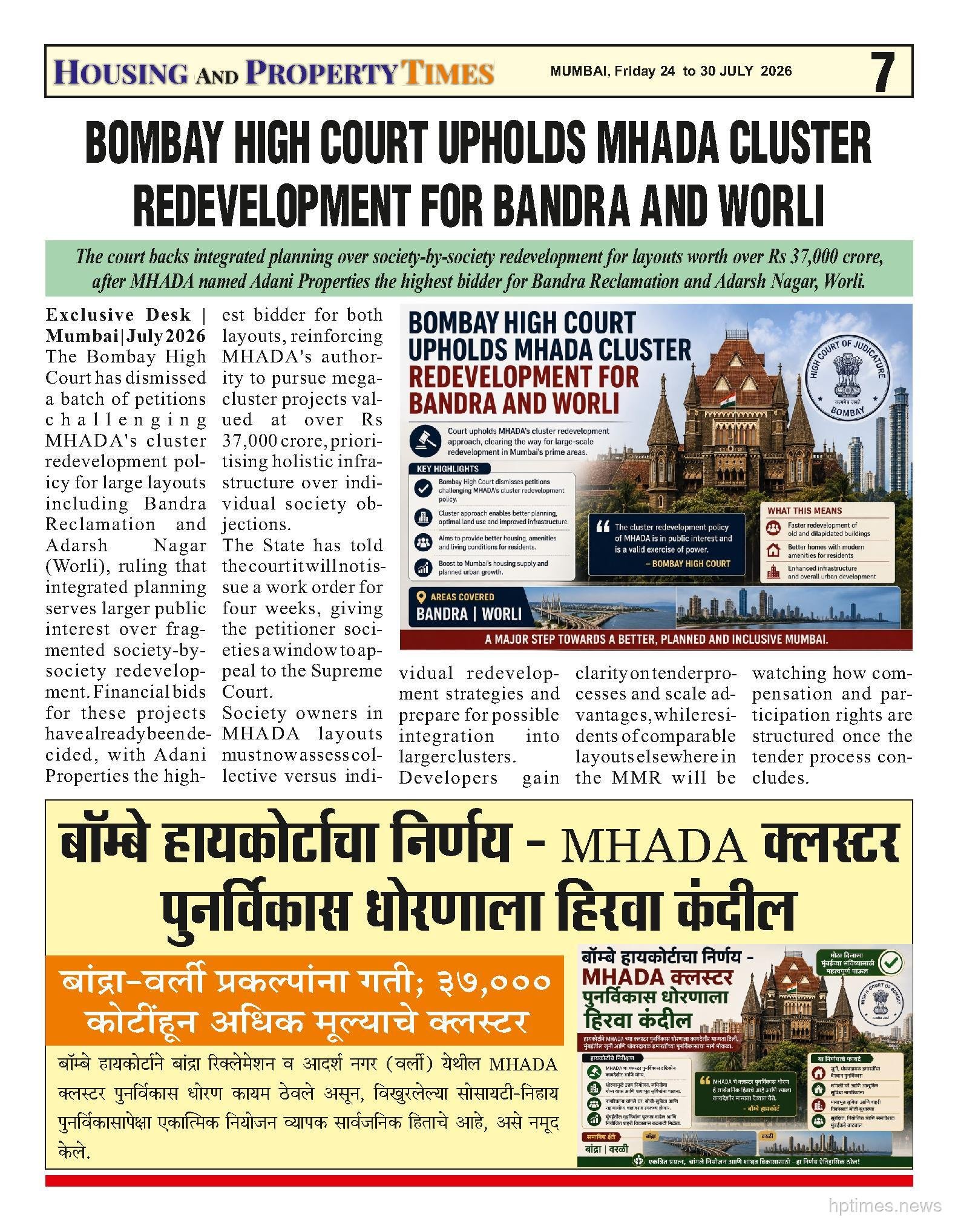
BOMBAY HIGH COURT UPHOLDS MHADA CLUSTER REDEVELOPMENT FOR BANDRA AND WORLI
Page 6
BOMBAY HIGH COURT UPHOLDS MHADA CLUSTER REDEVELOPMENT FOR BANDRA AND WORLI
 Page 7
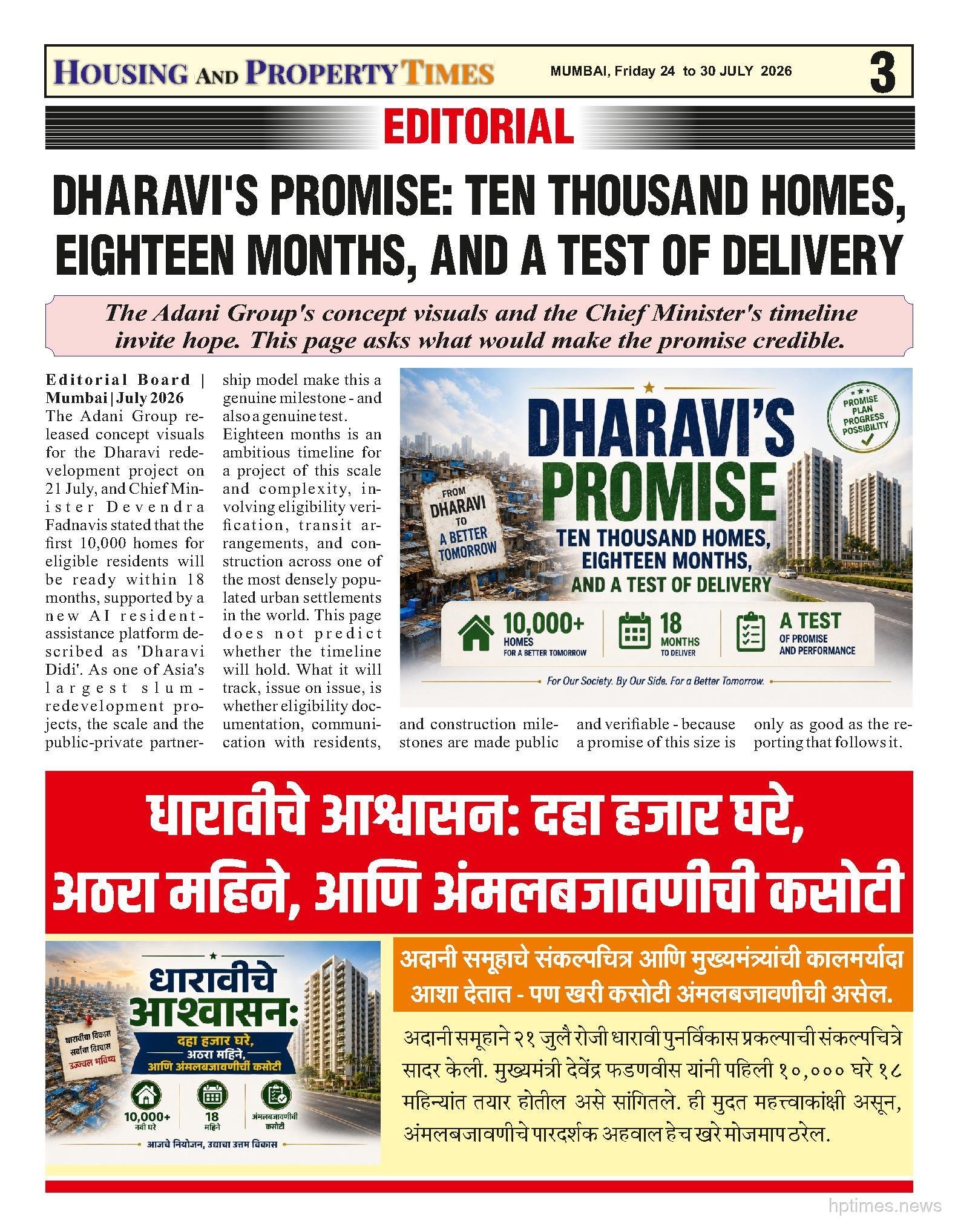
DHARAVI'S PROMISE: TEN THOUSAND HOMES, EIGHTEEN MONTHS, AND A TEST OF DELIVERY
Page 7
DHARAVI'S PROMISE: TEN THOUSAND HOMES, EIGHTEEN MONTHS, AND A TEST OF DELIVERY
Comments (0)