📖 View in Flipbook All editions
NOMINATION IS NOT INHERITANCE: READING THE SOCIETY-RULES CHANGE CORRECTLY
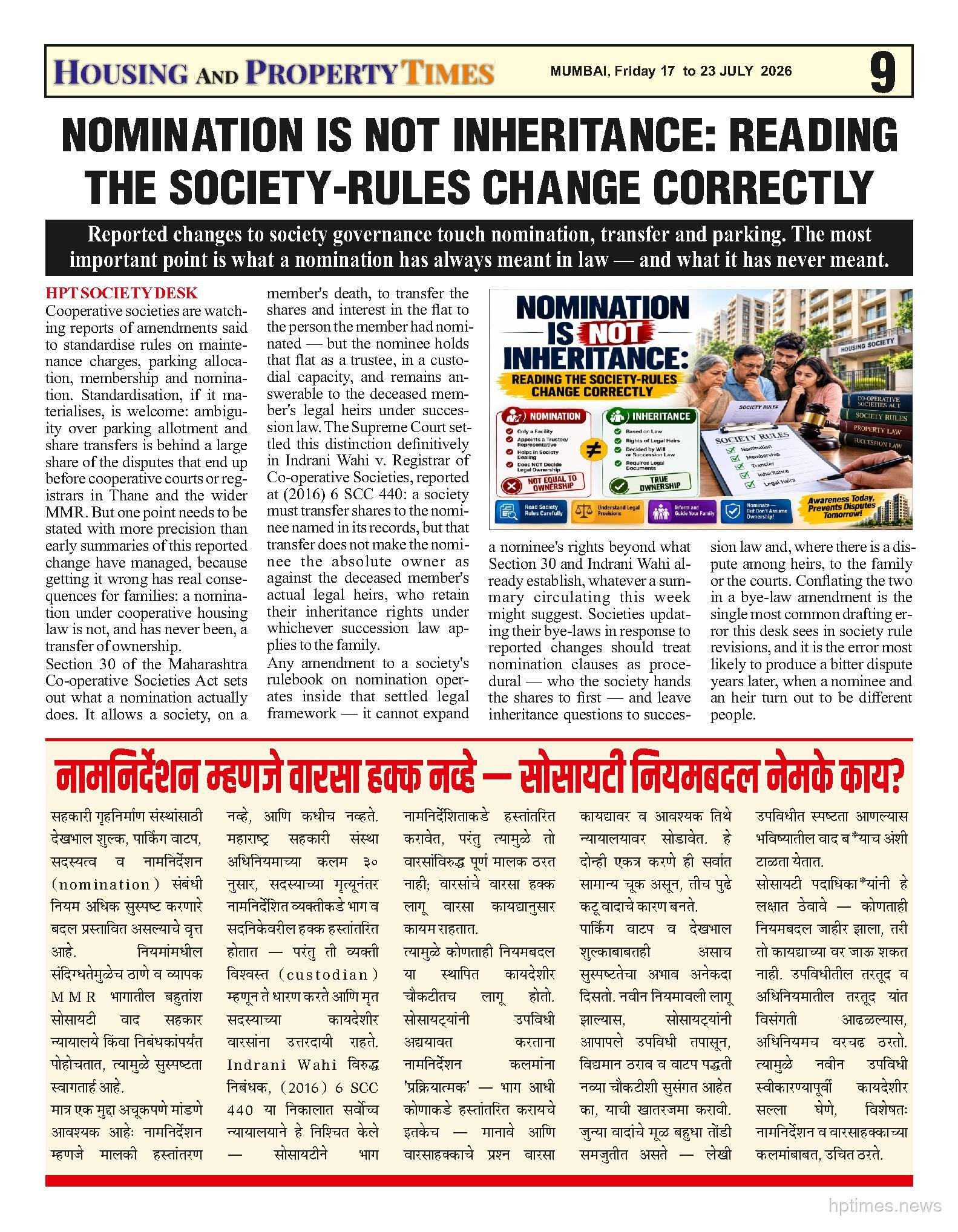
नामनिर्देशन म्हणजे वारसा हक्क नव्हे — सोसायटी नियमबदल नेमके काय? HPT SOCIETY DESK | NONE Cooperative societies are watching reports of amendments said to standardise rules on maintenance charges, parking allocation, membership and nomination. Standardisation, if it materialises, is welcome: ambiguity over parking allotment and share transfers is behind a large share of the disputes that end up before cooperative courts or registrars in Thane and the wider MMR. But one point needs to be stated with more precision than early summaries of this reported change have managed, because getting it wrong has real consequences for families: a nomination under cooperative housing law is not, and has never been, a transfer of ownership. Section 30 of the Maharashtra Co-operative Societies Act sets out what a nomination actually does. It allows a society, on a member's death, to transfer the shares and interest in the flat to the person the member had nominated — but the nominee holds that flat as a trustee, in a custodial capacity, and remains answerable to the deceased member's legal heirs under succession law. The Supreme Court settled this distinction definitively in Indrani Wahi v. Registrar of Co-operative Societies, reported at (2016) 6 SCC 440: a society must transfer shares to the nominee named in its records, but that transfer does not make the nominee the absolute owner as against the deceased member's actual legal heirs, who retain their inheritance rights under whichever succession law applies to the family. Any amendment to a society's rulebook on nomination operates inside that settled legal framework — it cannot expand a nominee's rights beyond what Section 30 and Indrani Wahi already establish, whatever a summary circulating this week might suggest. Societies updating their bye-laws in response to reported changes should treat nomination clauses as procedural — who the society hands the shares to first — and leave inheritance questions to succession law and, where there is a dispute among heirs, to the family or the courts. Conflating the two in a bye-law amendment is the single most common drafting error this desk sees in society rule revisions, and it is the error most likely to produce a bitter dispute years later, when a nominee and an heir turn out to be different people.
React
More from this issue & web
 Page 1
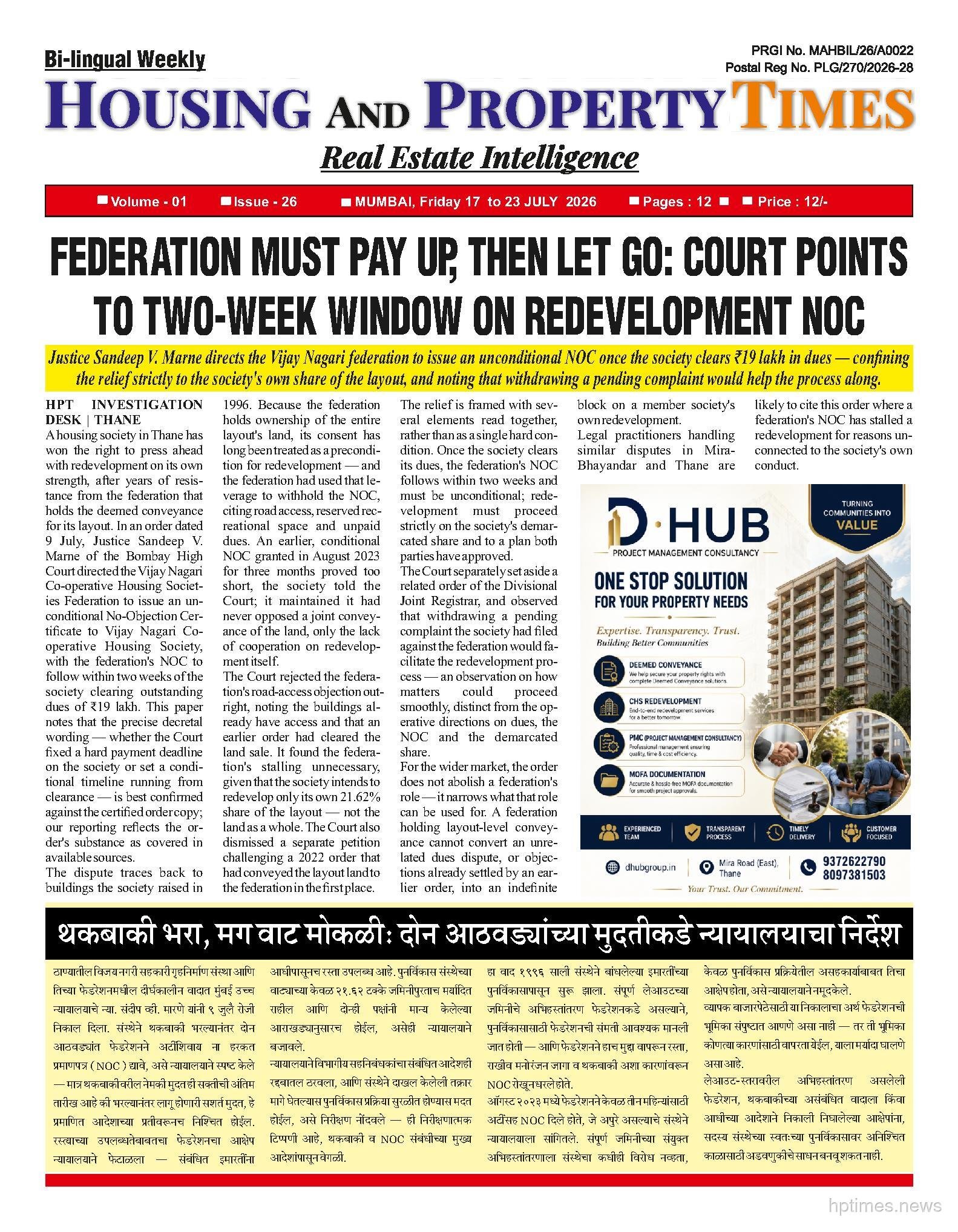
FEDERATION MUST PAY UP, THEN LET GO: COURT POINTS TO TWO-WEEK WINDOW ON REDEVELOPMENT NOC
Page 1
FEDERATION MUST PAY UP, THEN LET GO: COURT POINTS TO TWO-WEEK WINDOW ON REDEVELOPMENT NOC
 Page 2
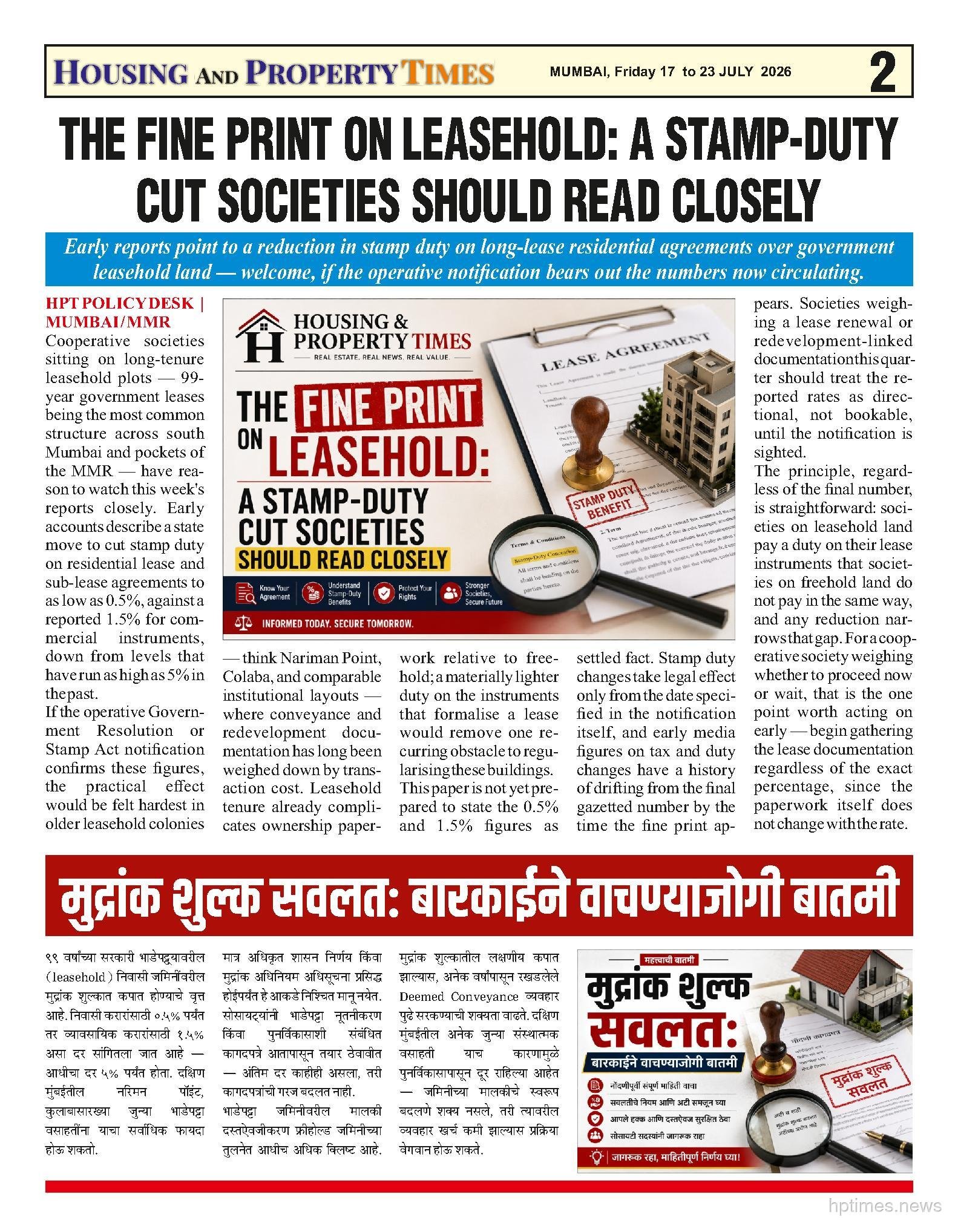
THE FINE PRINT ON LEASEHOLD: A STAMP-DUTY CUT SOCIETIES SHOULD READ CLOSELY
Page 2
THE FINE PRINT ON LEASEHOLD: A STAMP-DUTY CUT SOCIETIES SHOULD READ CLOSELY
 Page 3
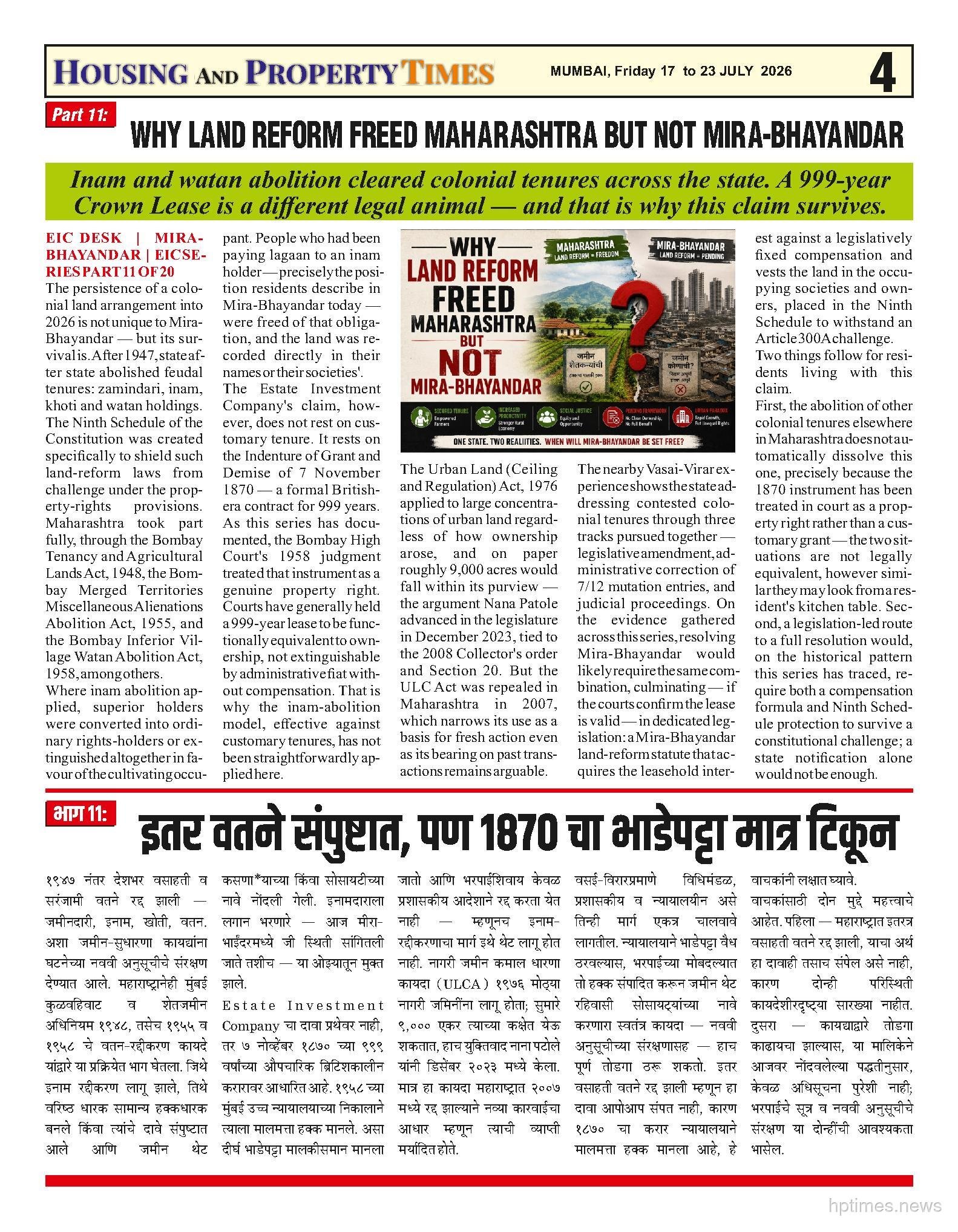
WHY LAND REFORM FREED MAHARASHTRA BUT NOT MIRA-BHAYANDAR
Page 3
WHY LAND REFORM FREED MAHARASHTRA BUT NOT MIRA-BHAYANDAR
 Page 4
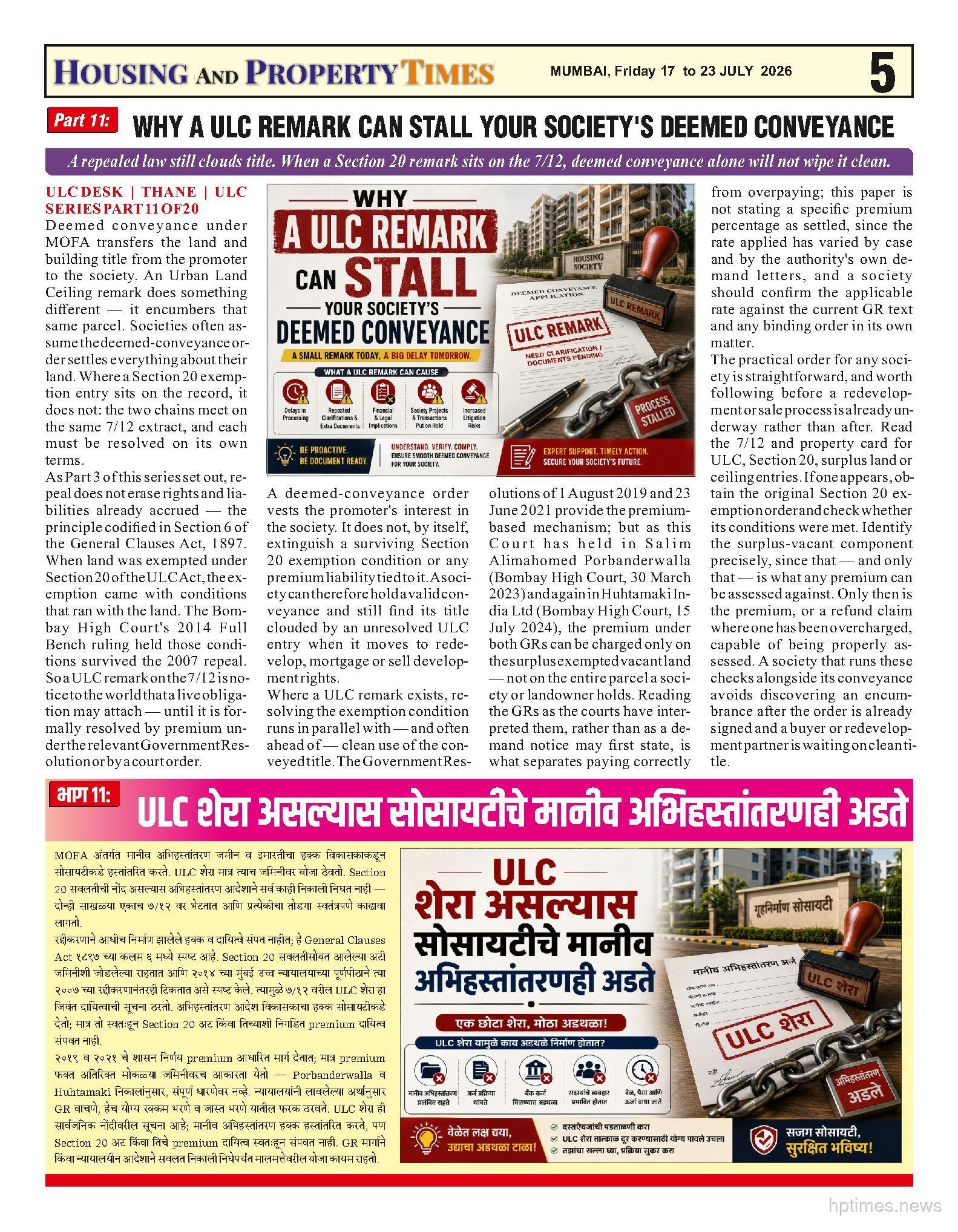
WHY A ULC REMARK CAN STALL YOUR SOCIETY'S DEEMED CONVEYANCE
Page 4
WHY A ULC REMARK CAN STALL YOUR SOCIETY'S DEEMED CONVEYANCE
 Page 5
WHO WOULD RUN UBRA — AND HOW MANY RESIDENTS MUST SAY YES
Page 5
WHO WOULD RUN UBRA — AND HOW MANY RESIDENTS MUST SAY YES
 Page 6
CLUSTER OVER CHAOS: KARNIK-MODAK BENCH CLEARS THE PATH FOR MHADA-LED REDEVELOPMENT
Page 6
CLUSTER OVER CHAOS: KARNIK-MODAK BENCH CLEARS THE PATH FOR MHADA-LED REDEVELOPMENT
Comments (0)